WIllow Lake in Fort Worth is an artificial lake in an urban setting, which nevertheless boasts a wide variety of wildlife. I spent a week near there and saw fish, turtles with foot-long shells, scaups, coots, ducks, grey herons, nutrias, and more.
The nutrias are South American water rodents that were introduced recently into Louisiana and have been spreading in the southern US. In many places they’re considered pests, because they eat all the desirable water plants. I suspect them of eating the duck eggs at Willow Lake, but don’t have proof so I won’t say that.
I’ve been fortunate to have traveled many places, and to have lived for extended periods in China, Australia, France, and Ireland. During those travels, my family has received health care on many occasions, including for our small children in China and Asutralia, my wife in Scotland, and my 87-year-old mother in Ireland.
This health care has come in a variety of forms, including treatment for my ten-year-old daughter’s eyes at the Hospitaller Order of St. John of God or Fatebenefratelli (see left), located on San Bartolomeo, the only island in the Tiber River in Rome. That hospital was built in 1584 on the site of the Aesculapius temple.
We also faced emergency surgery for my mother’s hip at Beaumont Hospital in Dublin, Ireland and subsequent rehab at the Orthopaedic Hospital of Ireland in Clontarf (right). In China, we were served in medical facilities with separate queues for Western medicine (our choice) and traditional Chinese medicine (below left). I donated blood many times at the Hôtel-Dieu de Paris, founded in 651 on the Ile de la Cité (below right). I’ve also observed, though not had to depend upon, health care in Russia and even in economically oppressed places such as Haiti.
On the whole, I’ve received excellent care in a variety of conditions. Individual health providers have been courteous, knowledgeable, and dedicated to their professions. For myself and my family, the experience of care did not depend on the setting or language, but rather on the ailment or the specific people providing care.
And yet, one thing stands out: Among the industrialized nations, the United States is the only one without universal health care. All of the others provide health care for all. They also do it primarily through single-payer systems.
The United States operates instead through a complex bureaucracy of insurance policies, doughnut hole prescription drug coverage, forms and regulations galore, massive administration, unnecessary and excessive procedures, complex and confusing tax codes, leading to escalating costs and unfair coverage. The inequity of care actually costs all of us more in the end, because of lack of preventative care, inefficient delivery (e.g., emergency rooms), and lost productivity. Our system costs much more, even double that found in other countries.
If we were to find that spending a few dollars more gave us better care, there might be little room for argument. But in comparable economies, people spend much less, yet have longer, healthier lives (American Health Care: A System to Die For: Health Care for All). Why then, is the system that works in Canada, Japan, Europe, Australia, etc., not even under consideration here?
The answer is unfortunately all too obvious: Americans, unlike citizens in other countries, have ceded control of their own health care to profit-making insurance companies, hospitals, clinics, laboratories, pharmaceutical companies, and other entities. The best we can do is an occasional feeble cheer when someone asks why our government can’t even consider a single-payer system. Then we listen to an answer that mostly obfuscates and lays the blame for it back on our own timidity:
So far this school year, 36 children and teens have been murdered–more than one a week–and [Rev. Michael] Pfleger at St. Sabina Church] is among a chorus of weary Chicagoans who say the slayings aren’t getting the attention they deserve.
Had 36 kids died of swine flu this year, “there would be this great influx of resources that say, ‘Let’s stop this, lets deal with this,'” Pfleger said.
why overlook the humanity of so many others because of their ethnic background or economic circumstances? Surely the slaughter of dozens of Chicago schoolchildren is worthy of wide national coverage. CNN has covered the story, but there has been precious little coverage elsewhere.
Emily Dickinson’s “My River” tells the comforting tale of the river running to the gracious sea:
My river runs to thee.
Blue sea, wilt thou welcome me?
My river awaits reply.
Oh! sea, look graciously.
I’ll fetch thee brooks
from spotted nooks.
Say, sea, Take me!
But as a recent article in The Economist (Sin aqua non, April 11-17, 2009, pp. 59-61) points out, many rivers no longer reach those welcoming waters:
An alarming number of the world’s great rivers no longer reach the sea. They include the Indus [at right], Rio Grande, Colorado, Murray-Darling and Yellow rivers. These are the arteries of the world’s main grain-growing areas.
Along with the rivers being depleted, the Aral Sea drying up.
Fish stocks in lakes and rivers have fallen roughly 30% since 1970. This is a bigger population fall than that suffered by animals in jungles, temperate forests, savannahs and any other large ecosystem. [Moreover,] half the world’s wetlands…were drained, damaged or destroyed in the 20th century, mainly because, as the volume of fresh water in rivers falls, salt water invades the delta, changing the balance between fresh and salt water.
Of course, the seas won’t disappear. In fact they’re actually rising due to the melting of the Greenland and polar ice caps. Thus, the world will survive, but it may not be one with blue seas and “brooks from spotted nooks.” People may survive, too, but in what kind of world? What will our poetry become when we’ve destroyed the brooks, the rivers, the forests, the fish and other animals, the plants, and the beauty of the planet?
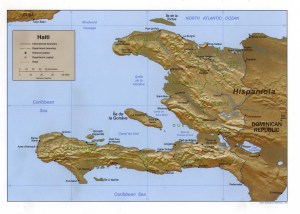
Haiti is experiencing an unprecedented humanitarian crisis. The US must not ignore one of its closest neighbors in a time of need.
Here are some grim facts behind the crisis, reflecting both long-term problems and recent natural catastrophes:
Last year, during a one-month period, hurricanes Fay, Gustav, Hanna and Ike devastated the country. Over 1000 people were killed; countless others were reported missing and injured.
The hurricane damage was equivalent to 15 percent of Haiti’s gross domestic product (GDP). A recent international donors’ conference raised $324 million in emergency and long-term assistance for Haiti. That was better than nothing, but it’s only a third of what Haiti needs to rebuild.
Meanwhile, over 30,000 undocumented Haitians face deportation orders from the US. If carried out, these orders would return Haitians to a country struggling to rebuild and not able to provide the critical social safety nets needed for people to survive. Their return would also diminish remittances, which mean the difference between life and death for Haitians.
There is high maternal and infant mortality, as well as unwelcome high rankings on most other indicators of poverty.
Despite these problems, organizations such as La Fondation Connaissance et Liberté (FOKAL) have made major strides toward sustainable development. External aid now can make the difference between compounding the suffering and building an independent, prosperous, and democratic nation.
What can be done?
The World Bank and International Monetary Fund should include Haiti in their Highly Indebted Poor Country initiative, a program to lower debt to manageable levels. Better yet, cancel Haiti’s crippling external debts until the economy can be self-sufficient.
US and other international aid to Haiti should be doubled immediately. Foreign aid should be structured as grants, not as loans, which may offer short-term help, but long-term shackles.
International aid should be focused on development, not military and police support. Haiti has enough guns already. Aid programs should work with NGO’s as well as government agencies.
Stop the deportations. Haitians should be granted Temporary Protected Status (TPS) and the Department of Homeland Security should conduct a thorough review of US policy towards Haiti. Individuals should call the DHS at 202-282-8495 [if unable to get through, call the White House Comment line at 202-456-1111] and urge these actions.
The US should extend the Haitian Hemispheric Opportunity through Partnership Encouragement Act (HOPE), which allows Haitian textile manufacturers to export duty-free to the United States. This could generate much-needed jobs in Haiti’s labor-intensive garment industry. The average Haitian garment worker earns $4 a day, while 77 percent of Haitians live on less than $2 a day. As Rep. Charles Rangel, said of the US textile industry concerns, “God should be so good to the people in Haiti that their exports should be a threat to the United States of America. That’s not going to happen.”
Ching-Chiu Lin is a founding member of the Youth Community Informatics project. Her work with Timnah, Lisa, and Karen at the Urbana Middle School integrated art, music, story-telling, cultural heritage, and multimedia in an after-school program. That’s one of the models for our current work.
Ching-Chiu’s dissertation, A qualitative study of three secondary art teachers’ conceptualizations of visual literacy as manifested through their teaching with electronic technologies, analyzed similar arts and new media projects in three schools. I’ve learned a little while ago that it was awarded second place for the 2008 Eisner Doctoral Research award. This was officially announced at the National Art Education Association (NAEA) convention in Minneapolis this month.
One of the most impressive set of projects I saw while in Dublin, Ireland last year was the Community Links Programme out of Dublin Institute of Technology. It was established in 1996 by DIT lecturer Dr. Tommy Cooke to help individuals and communities reach their full educational potential. Programs include psychotherapy, music, and courses for mature students.
One important component is the DISC Programme, which operates in 38 inner-city disadvantaged primary and secondary schools. DISC installs computer resources in schools and community centers, and trains teachers to integrate the use of computers into the teaching/learning process in all curricular areas. Projects include the use of comic creation, clay animation, video production, class blogs, podcasting, video game making, 3d design, and robotic Lego.
Staff such as Ian Roller and Riona Fitzgerald bring knowledge of pedagogy together with skills in video and computers to help teachers and youth leaders do amazing projects. More importantly, they do it in a way that empowers teachers as creative agents in the education process.
I was very fortunate to hear Elizabeth Pierre-Louis speak yesterday.
Elizabeth was on campus to accept the 2008 Young Humanitarian Award. As Director of the Library Program at Fondasyon Konesans Ak Libète (FOKAL) in Haiti, she helped to set up 45 community libraries across the country. She coordinates the training and management of these libraries, which are improving the quality of live for the people there. Elizabeth described a wide variety of programs of FOKAL, including projects on supplying running water, developing basic literacy, supporting the visual arts, dance and music, debate, and economic education.
Throughout these many programs, there is an emphasis on participatory democracy, including organization and responsibility of citizens, leadership, financial and technical management, resolving conflicts, and collective decision making. Elizabeth’s work is just part of an amazing organization helping people work together toward common purposes.
The photo, of the Monique Calixte Library in FOKAL’s Cultural Center, and this text below are from the FOKAL site.
The Fondation Connaissance et Liberté / Fondasyon Konesans Ak Libète (FOKAL) Cultural Center, built in 2003 in the center of Port-au-Prince thanks to funding from the Open Society Institute (OSI) and support from George Soros, is designed for meetings, training, reading, debates, recreation and discovery.
The center is comprised of a public library, with a membership of over 5,000 where children and youths from the poor neighborhoods of Port-au-Prince have access to reading materials in optimal conditions, a small auditorium, a café-terrasse and a cybercafé. The UNESCO auditorium is a hall designed for conferences, debates, meetings, audio-visual presentations, films, concerts and theatre. The center also includes a large atrium where one can discover the works of both Haitian and foreign painters, writers, and sculptors; and a sound and video production studio, a training hall and gardens…
FOKAL’s cultural center offers a place, eminently rare in Haiti, where peasants, women, children and youths from poor neighborhoods have a chance to interact with each other and with representatives of all sectors of society on subjects which concern education, the environment, culture, and democracy…
The book, How Europe Underdeveloped Africa, is now available online.
Rodney presents a new way of thinking about Africa’s so-called “underdevelopment.” The question was “why are some areas of the world rich and others poor?” I had been taught many reasons for this—that successful countries had better inventions, more adventurous explorers, greater natural resources, geographical advantages, better climate, less corruption, or just good fortune. The implication was that they mostly deserved their status as did the less successful ones. Africa’s underdevelopment was thus to a large extent Africa’s fault. Of course, a generous impulse might lead us to help those less fortunate to develop and share the goods of the world, maybe not to achieve full equality, but at least enough to meet their minimal needs.
Rodney challenges that entire view. He describes an Africa that is more developed than Europe in most ways except military conquest. When Europe fails to compete on even terms with Africa and Asia it turns to war and colonization to take by force what it cannot achieve through fair trade. Africa is then consciously exploited by European imperialists, leading directly to the modern underdevelopment of most of the continent. Thus, “underdeveloped” is an active verb, with an agent who does the underdeveloping; it’s not just a descriptive adjective.
Rodney’s thesis was highly influential. James M. Blaut’s works, The Colonizer’s Model of the World: Geographical Diffusionism and Eurocentric History (Guilford, 1993) and 1492: The Debate on Colonialism, Eurocentrism, and History (Africa Research & Publications, 1993) extends the basic thesis, with more detailed economic analyses.
Other writers have criticized aspects of Rodney’s work, but the general idea seems even more salient in an era of neocolonialism. For example, Haiti today struggles under a crushing external debt. Nearly half of that was incurred under the Duvaliers, puppet dictators of the US. The Duvaliers stole the resources of the Haitian people, then assumed debts that oppress their children and grandchildren. Debt service, a burden essentially imposed by the US, makes economic growth nearly impossible. Yet commonplace accounts would say that “they” (the Haitian people) can’t manage finances, don’t know how to protect their natural resources, have a corrupt economy, lack creativity or initiative, or otherwise are to blame for their fate.
For many countries in Africa, for Haiti, and for other colonized areas, the forcible appropriating of indigenous human and natural resources means underdeveloping those areas. When we turn “underdevelop” into a past participle, “underdeveloped,” we make it easy to forget how that happened. Rodney puts it this way:
The question as to who, and what, is responsible for African underdevelopment can be answered at two levels. Firstly, the answer is that the operation of the imperialist system bears major responsibility for African economic retardation by draining African wealth and by making it impossible to develop more rapidly the resources of the continent. Secondly, one has to deal with those who manipulated the system and those who are either agents or unwitting accomplices of the said system. The capitalists of Western Europe were the ones who actively extended their exploitation from inside Europe to cover the whole of Africa. In recent times, they were joined, and to some extent replaced, by the capitalists from the United States; and for many years now even the workers of those metropolitan countries have benefited from the exploitation and underdevelopment of Africa. (§1.2)
Rodney’s account of Africa, written 37 years ago, is still relevant for Africa today. But it extends to other international regions and even to communities within so-called “developed” countries. When we see, and label, communities as underdeveloped, low-resource, impoverished, disadvantaged, economically depressed, troubled, or marginalized, we follow the lead of the 1965 Moynihan report, which described a “tangle of pathology,” locating problems within the community with causes in the distant past.
We should ask not only how these communities compare to privileged ones, or even what useful things we might do to help them. We need to look first at the structures and mechanisms of power that caused these conditions in the first place, and now, continue to maintain them. This means turning from the conceit that underdevelopment just happens, that an appropriate and full response is to “give” to those less fortunate. It requires collaborative struggle in which all participants are willing to examine the roots of oppression and to engage in the practice of freedom.
Residents of New Orleans lost their homes, their neighborhoods and schools, their jobs and businesses, and the lives of family members because of Hurricane Katrina in 2005. The effect on the community was devastating as has been documented in books and movies, e.g., Katrina’s Children and When the Levees Broke: A Requiem in Four Acts. To this day major areas, such as the Ninth Ward, are still struggling to recover.
Of all the losses, losing keepsakes and family treasures was especially hard. One category had an especially acute impact on a city famous for its food: Residents lost their family recipe files. These included the family recipes handed down by generations, as well as those clipped from newspapers, such as the The Times-Picayune. Without these recipes the task of rebuilding families and communities was made much harder.
As residents started to rebuild their lives, The Times-Picayune of New Orleans became a post-hurricane swapping place for old recipes that were washed away in the storm. The newspaper has compiled 250 of these delicious, authentic recipes along with the stories about how they came to be and who created them. Cooking Up a Storm [Recipes Lost and Found from The Times-Picayune of New Orleans] includes the very best of classic and contemporary New Orleans cuisine, from seafood and meat to desserts and cocktails. But it also tells the story, recipe by recipe, of one of the great food cities in the world, and the determination of its citizens to preserve and safeguard their culinary legacy.
The collective effort to reconstruct family recipe collections is positive counterpoint to all of the negative stories that came out of the Katrina disaster. It’s a wonderful example of community informatics—people coming together to address a common need, making use of newspapers, fax, email, digital archives, and other communication tools.








 Ian Roller and
  Riona Fitzgerald bring knowledge of pedagogy together with skills in video and computers to help teachers and youth leaders do amazing projects. More importantly, they do it in a way that empowers teachers as creative agents in the education process.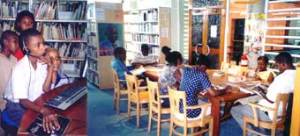


 From Cooking up a Storm, ©2008 Marcelle Bienvenu and Judy Walker. Used with permission of
