The New Jim Crow

Writing in Mother Jones, Michelle Alexander  has an excellent article on The New Jim Crow. It’s about how the War on Drugs has led to a permanent American undercaste. Similar ideas came up in my class yesterday as we discussed equity and excellence in education. As with many other topics we saw how making progress within education cannot be separated from addressing the same problems beyond the walls of academia.

Here’s an excerpt from her article:

Ever since Barack Obama lifted his right hand and took his oath of office, pledging to serve the United States as its 44th president, ordinary people and their leaders around the globe have been celebrating our nation’s “triumph over race.” Obama’s election has been touted as the final nail in the coffin of Jim Crow, the bookend placed on the history of racial caste in America.

Obama’s mere presence in the Oval Office is offered as proof that “the land of the free” has finally made good on its promise of equality. There’s an implicit yet undeniable message embedded in his appearance on the world stage: this is what freedom looks like; this is what democracy can do for you. If you are poor, marginalized, or relegated to an inferior caste, there is hope for you. Trust us. Trust our rules, laws, customs, and wars. You, too, can get to the promised land.

Perhaps greater lies have been told in the past century, but they can be counted on one hand. Racial caste is alive and well in America.

She offers some important information that should make us all question how America deals with race today, starting with:

There are more African Americans under correctional control today—in prison or jail, on probation or parole—than were enslaved in 1850, a decade before the Civil War began.

The article addresses the obvious questions that some readers may have, such as “well, shouldn’t we be locking up criminals?” or “aren’t we at least improving in the ways we deal with racism and poverty?”

It’s worth noting that Alexander’s just saying that the absolute number of African Americans under correctional control today is greater than the number enslaved in 1850. In a sense that makes it less horrific. One might also qualify the claim by pointing out that being on parole is very different from being a slave.

Nevertheless, some aspects of the modern system are even worse and less justifiable. Many people would be surprised to learn that the absolute scale of the institution is now greater. Unlike slavery, it’s now pervasive in every state, and stands out as inconsistent with other contemporary practices. And the current prison system doesn’t even produce goods; it simply drains scarce resources to destroy lives.

Climate change’s OJ Simpson moment

Bill McKibben has just written an excellent article: Climate Change’s OJ Simpson Moment | Mother Jones. Although one can read it as yet another argument pro or con on climate change, it’s even more a sophisticated analysis of how the discourse has developed over the last 20 years, in the process giving a surprisingly sympathetic account of climate change deniers.

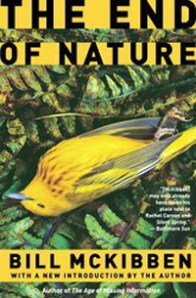
He starts by discussing the positive reaction to his first book, The End of Nature, which was one of the first books for a general audience on climate change:

And here’s what’s odd. In 1989, I could fit just about every scientific study on climate change on top of my desk. The science was still thin. If my reporting made me think it was nonetheless convincing, many scientists were not yet prepared to agree.

Now, you could fill the Superdome with climate-change research data…Every major scientific body in the world has produced reports confirming the peril. All 15 of the warmest years on record have come in the two decades that have passed since 1989. In the meantime, the Earth’s major natural systems have all shown undeniable signs of rapid flux: melting Arctic and glacial ice, rapidly acidifying seawater, and so on.

Somehow, though, the onslaught against the science of climate change has never been stronger, and its effects, at least in the US, never more obvious: fewer Americans believe humans are warming the planet.

But McKibben doesn’t just rail agains the deniers of global warming, or pull out reams of reports, data, and arguments. Instead, he  talks about how we all respond to disturbing news and to mountains of evidence we don’t have the capacity to sort through. I felt as if he were speaking to all of us across a wide range of complex topics in the modern era–health, economics, education.

He goes on then to show how evidence alone is not the issue; in fact, its effect can be contrary to what you might think at first:

the immense pile of evidence now proving the science of global warming beyond any reasonable doubt is in some ways a great boon for those who would like, for a variety of reasons, to deny that the biggest problem we’ve ever faced is actually a problem at all.

The “OJ Simpson moment” relates to the problem that the defense faced in the OJ Simpson murder trial, in which “it was pretty clear their guy was guilty. Nicole Brown’s blood was all over his socks, and that was just the beginning.” How could they cast doubt, when there appeared to be no remotely reasonable doubt? McKibben shows how, ironically, one resource they had was the immense body of evidence against their client.

He also shows how ordinary language is shaped and changed. One reason the deniers of global warming are winning the debate is that they’re able to connect with our fear of change, of having to do something. As McKibben says:

The great irony is that the climate skeptics have prospered by insisting that their opponents are radicals. In fact, those who work to prevent global warming are deeply conservative, insistent that we should leave the world in something like the shape we found it. We want our kids to know the world we knew. Here’s the definition of radical: doubling the carbon content of the atmosphere because you’re not completely convinced it will be a disaster.

My retirement plans

It’s with satisfaction, relief, anticipation, and a tinge of sadness, that I submitted my intention to retire in August of this year. I will have been with the University of Illinois for twenty years, half of those in the College of Education and half in the Graduate School of Library and Information Science. The retirement means that I’ll be changing my mode of work, with more attention to writing and more international projects.

I’ve enjoyed and benefitted greatly from my time here, and even more from working with you all. I can’t think of another group anywhere with such high collegiality, dedication, moral perception, and responsible leadership. The scholarship, teaching, and learning have always been outstanding and there’s been a lot of fun on top of it all.

I expect to continue working part-time on the Youth Community Informatics and Community Informatics Corps grants through June, 2011, and perhaps do other work after that, so this is not a good-bye, just an announcement about a new role for me.

Best wishes and enjoy all the snow,

Chip

Inside NCI

During 2007-08, I held a Fulbright Chair position at the National College of Ireland, located in Dublin.

It was a great experience for me at a place, which is very different from the University of Illinois in scale, but with surprisingly many common interests, especially in areas such as community studies, learning, and computing. In case you’d like to see more about the College, you could look at the February issue of Inside NCI, just out.

Evangelicals attack Voudo practitioners in Haiti

As if people in Haiti haven’t faced enough problems already, Christians, many from outside Haiti, have begun attacking people there who are simply praying or singing.

PORT-AU-PRINCE, Haiti – Angry crowds in a seaside slum attacked a group of Voodoo practitioners Tuesday, pelting them with rocks and halting a ceremony meant to honour victims of last month’s deadly earthquake.

Voodooists gathered in Cite Soleil where thousands of quake survivors live in tents and depend on food aid. Praying and singing, the group was trying to conjure spirits to guide lost souls when a crowd of Evangelicals started shouting. Some threw rocks while others urinated on Voodoo symbols. When police left, the crowd destroyed the altars and Voodoo offerings of food and rum.

Some groups use an interesting method to convince Haitians to abandon their beliefs. Quoted in the same article, Pastor Frank Amedia of Miami-based Touch Heaven Ministries says:

“We would give food to the needy in the short term but if they refused to give up Voodoo, I’m not sure we would continue to support them in the long term because we wouldn’t want to perpetuate that practice. We equate it with witchcraft, which is contrary to the Gospel.”

Does this mean that pelting worshipers with rocks, urinating on their sacred symbols, and withholding food from hungry people is the modern Christian way? Aren’t those acts themselves “contrary to the Gospel”? Why do outsiders, in this case mostly Americans, think that violence is the path to rebuilding a nation? When will we learn that acting responsibly in the world doesn’t mean insisting that we are always right and that our way is the only way?

See the photo in the Associated Press report at Voodooists attacked at ceremony for Haiti victims.

Should we subsidize good journalism?

The Death and Life of American Journalism: The Media Revolution that Will Begin the World Again, by John Nichols and Robert W. McChesney, has just been published. It makes a convincing case that journalism is a public good, with broad social benefits, including being necessary for democracy.

They also show how good journalism is under threat from a variety of forces. One is media consolidation, meaning that a few huge corporations control most of our media. Another is that our reliance on the Internet is radically changing business models, making it increasingly difficult to support investigative journalism. Moreover, whether the Internet can remain open, diverse, and democratic is very uncertain. Meanwhile, support for public media is waning, especially in the US, which spends only a tiny percentage of what other nations do for non-corporate media.

To address these problems, they propose what some might consider to be a radical proposal. But it’s actually quite in line with traditional government initiatives in areas such as defense, education, transportation, etc., which support vital services that the market can’t supply. Moreover, their proposal operates through free market mechanisms, without requiring, or even allowing government control over media content. It’s an innovative idea, one whose importance goes far beyond just saving the local newspaper.

Their proposal contains four key elements:

  1. free postage for any publication, with less than 20% of its pages in advertising
  2. up to $200 individual tax deduction for a newspaper subscription
  3. a viable school newspaper and radio station for every middle school, high school and college, so that young people not only read the news, but also produce it
  4. increased spending on public and community broadcasting

I might add other items, such as broadening the youth production aspect to include other sites in which that occurs, such as community centers and libraries, or find some way to support local book production as well.

The proposal could ensure a diversity of news sources, with support for those who produce the news. It would immediately move us beyond reliance on a handful of media conglomerates, while still allowing their operation, for those who so chose. The cost is no more than that supported by other nations with advanced economies. It’s well worth considering for anyone concerned with maintaining a modern democracy.

Nichols and McChesney, are co-founders, along with Josh Silver, of Free Press, which works for net neutrality and has launched a major campaign to save the news.

References

Nichols, John, & McChesney, Robert W. (2009, March 18). The death and life of great American newspapers. The Nation.

New FEMA flood maps are full of errors

In 2004, the Federal Emergency Management Agency began a $200 million/year flood map project using mapping technology (GIS/GPS) to identify areas susceptible to flooding. The goal was to mitigate future catastrophes like the flood in Iowa, which caused $10 billion of damage.

But critics, including civic leaders, developers and home owners in several states, have complained that the new maps are riddled with inaccuracies, seem arbitrarily drawn, and will stifle growth and hurt property values…Doug Boyer, whose home would be in the flood plain for the first time if FEMA’s Oakville map gains final approval, said it’s inexplicable why FEMA extended the flood plain border to the center of Main Street in the relatively flat town. “The east side is in the flood plain and the west side is fine — it’s odd that the water will stop at Main Street.” FEMA flood maps are full of errors, cities say

Property owners naturally have a vested interest in what the new maps say. Nevertheless, it’s easy to sympathize with Boyers wonderment at why the water would stop at Main Street. This seems like a good argument for the incorporation of user-generated content in the production of maps, or what’s called Volunteered Geographic Information, as in a forthcoming issue of Geomatica.

Good-bye to my Alaska boots

There are times when it’s better to say good-bye.

Many years ago, I made several trips to Alaska for the Quill project. I recall it being in November when I first visited Shungnak, along the Kobuk River, about 150 miles north of the Arctic Circle. It was beautiful weather, but cold, with temperatures in the afternoon below 0˚F, dropping to -20˚F or less than that overnight.

My hosts Bonnie and Hans were rightly concerned about my citified clothes, especially my ordinary hiking boots. They insisted that I needed Sorel winter boots. With fewer than 200 people, Shungnak had what you might generously call only one small general store, but it was no place to shop for fancy boots, or boots of any kind. Items like that have to wait on the infrequent air deliveries.

Amazingly, there was an available pair of boots, just for me. Hans and Bonnie had about 25 sled dogs, who slept outside in that cold climate. Hans would warm up huge pots of food for them. One time, he got a small burn hole in his boot. You can see the small innertube patch in the photo. The boots by then had become a bit worn in other ways, so he purchased a new pair, but kept the old ones around. Fortunately, we both wear size 14, so his boots fit me perfectly.

I was very appreciative of them, especially on a long sled dog ride, which is a story for another time. Since I had more villages to visit, Hans graciously gave me his old boots.

Later, in McGrath, I met some folks waiting for the small plane we’d be taking towards Juneau. They asked where I was from, and I told them Cambridge, Massachusetts. They looked me over. My clothes were getting a bit travel worn from village life and sleeping on floors. But they especially focused on my boots. Finally, one old man said,

“There’s no way you came from Cambridge, Massachusetts, looking like this!”

That bare nugget of a story then started to spread. Somehow, in pre-web Alaska, people would learn within hours all that was happening in the next village 100 miles away. As I traveled, I first found myself being asked whether I was that city guy dressing up to look Alaskan. Then, I dropped out of the story entirely, and I began to hear about “some guy” who wore worn and patched boots, just as if he kept a pack of sled dogs.

Unfortunately, I haven’t been back to Alaska for a long time. The boots have been moved from one closet to another. I’ve been thankful for them on cold days with heavy snow, but I never felt that my climate did them justice.

I reluctantly decided that it’s time to say good-bye. Maybe I can find some guy who spends his life out on the streets, who has feet as big as mine, and who could make much better use of them. So, this is just a little message to say thanks to Hans and Bonnie, and to the boots that kept me warm and will always be in my memories.

Elizabeth Peratrovich Day

Today, February 16, is Elizabeth Peratrovich Day. I learned about it from Bonnie and Hans, friends of nearly 30 years. They have a great blog, Bonnie & Hans’ Excellent Adventure, out of Grayling Alaska.

In a recent post, Elizabeth’s Day, they talk about Elizabeth Peratrovich the Anti-Discrimination Act of 1945, Alaska’s Civil Rights Day, and the film For the Rights of All: the Ending of Jim Crow in Alaska, a documentary about the work of Alaska Natives to end discrimination.

Coming attractions!

Patrick W. Berry’s course website Writing Technologies is designed to “explore historical and theoretical accounts of how writing technologies have shaped and continue to shape what and how we compose” and to write “using a variety of new and sometimes old technologies in order to explore the affordances and limitations of each.” It’s wonderful to see how the medium of the course illustrates the very principles it’s teaching.

In addition to excellent standard course resources, there’s a blog, with many interesting posts. One, of special interest to me, is “The Disappearance of Technology”: The Movie. Patrick writes:

After reading Chip Bruce and Maureen Hogan’s “The Disappearance of Technology: Toward an Ecological Model of Literacy,” our class created movie posters using Photoshop that attempted to capture a central theme of the reading.

The result of this effort is available here: http://gallery.me.com/pb112233/100088.

The idea to do the posters and the subsequent realizations are excellent (be sure to try the slideshow option). I was impressed by the variety of responses and the creative use of photos, colors, graphics, fonts, and other visual elements. The posters show how re-mediating an idea can both bring out the meaning and add new meaning as well, with different posters bringing out different aspects of our relations with new technologies.