It’s difficult to capture the feel of the Blizzards of 2026 in a few photos.
There are now hundreds of trucks here, many brought in from other states. There are trucks to plow snow, to restore cable (=internet) service, to repair electric lines. All of the local motels are fully booked with workers, coming from Western Mass, Indiana, and other far-flung places. Local oil and propane companies are stretched thin as customers call to get their heat, well water, and cooking restored.
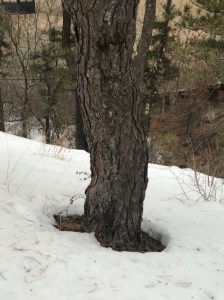
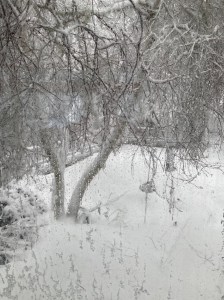
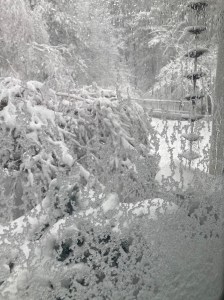
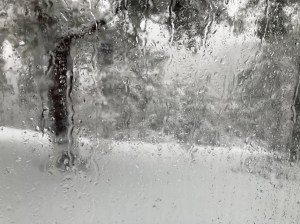
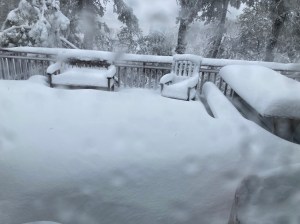
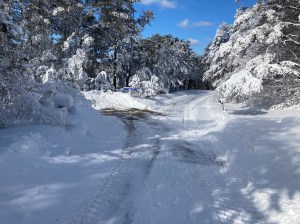
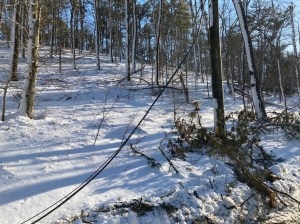
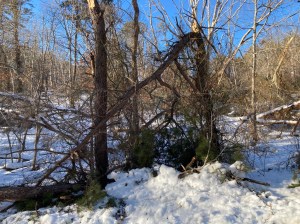
Tree wells; this one reached dangerous proportions later onOur drivewayA view out one window showing a rain chain and a Japanese maple covered in snowDown the hill behind our houseOur deck, with soft snow pillowsTop of our driveway; note the street signDowned power, cable, and telephone lines everywhereSuprising number of pine trees down or with lost branches
The Blizzards of 2026 started for us around January 25.
From inconvenience to danger
We’ve experienced several feet of snow and near-hurricane force winds. That’s led to power outage, loss of internet and cell connectivity, downed trees and fences, impassable driveway and roads, and other problems.
We have a wood stove and plenty of firewood, plus a propane-powered generator that keeps some essential services going, such as the well pump. But others are not so fortunate. An acquaintance is home bound with a terminal illness. His visiting nurse can’t get to him because the roads are blocked.
In our case, a small problem has been that we couldn’t call for help because our cell service went from feeble to non-existent and the internet connection was out.
The local superette is one of the few places open with food. They have no power, so shopping means to walk around with a flashlight to find something edible. We bag the item and write down its price in a notebook, On checkout, we report what we find. There’s no working cash register or scanner. Transactions are cash only.
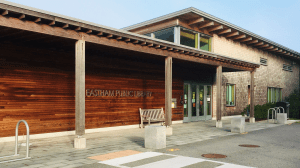
Eastham Public Library
Enter the warming center
One bright spot in all of this are the warming centers. We enjoyed one at the Eastham library. It’s yet another reminder of the wonderful things that a library can do. It meets community needs and is open to everyone,
In the Eastham center, there’s plenty of water, hot coffee, and half & half. Library staff brought in food–green salad, turkey salad, and pizza. There are newspapers and power chargers. A couple are working on jigsaw puzzles. A parent is playing cards with a seven year-old. People see old friends and acquaintances. They learn about weather, road conditions, and specialty health services.
Other warming centers are at churches, the fire department, the high school, and other public places (with generators). Some have cots and blankets.
A YouGov poll had asked Americans about their least favorite insects (or small arthropods). 86% had a “very or somewhat negative” reaction to mosquitoes; cockroaches, 84%; wasps, 76%.
Trump’s disapproval rating is currently 61%, meaning that he’s not as unpopular as wasps, cockroaches, and mosquitoes, but is disliked more than spiders (57%) and ants (52%).
Mosquitoes in our ecosystem
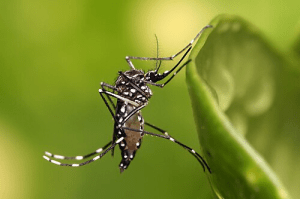
I was saddened to see mosquitoes being judged less popular than Trump. Unlike Trump, they serve essential ecological roles, being a major food source for fish, aquatic insects such as dragonflies, and birds. Adult mosquitoes are eaten by bats, spiders, birds, and dragonflies.
Both male and female mosquitoes feed on flower nectar, serving as pollinators for many plant species. Larval mosquitoes live in water and consume organic matter, such as detritus, leaves, and microbes, which helps filter the water and break down nutrients.
While mosquitoes do transmit diseases such as malaria, Zika, and dengue, only a small percentage of the 3,500+ species feed on humans. As a result of that small percentage, over 120 people die from West Nile virus each year in the US. During a year I spent in Paris, I was unable to donate blood for a month because of fear that I might bring that virus from the US. Deaths from other mosquito-borne diseases are rare, but do happen, and are of course tragic for individuals and families. These are serious concerns.
Bottom line
In comparison, looking just at health, Trump’s significant cuts to Medicaid and the Affordable Care Act, could result in not a few, but over 50,000 preventable deaths annually. One study estimates over 14 million additional deaths by 2030 due to the dismantling of the US Agency for International Development and millions more due to other cuts to global health programs.
So, while mosquitoes can be annoying, and even dangerous, I hardly think they are more deserving of disapproval than Trump. The same could be said for cockroaches and wasps.
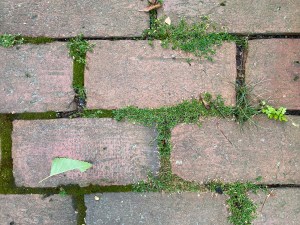
By mid-August, our paver entryway is a bounty of green, often obscuring the dark red pavers.
But I enjoy seeing the “weeds” return each year. It’s not that hard to tame them, but I enjoy seeing the varieties and the force of life bringing green into seemingly inhospitable conditions.
Many people would criticize our garden maintenance, or at best, express sympathy for this condition. One website says,
There’s nothing more frustrating than having weeds growing between the joints of pavers. Before you know it, the weeds can take over and be almost impossible to remove.
The site describes a method for removing those weeds. It then offers a service ($2 / square foot) to prevent their return:
After you’ve invested all this time an energy in removing the weeds from your pavers, the last thing you want the weeds to do is return. The problem: unless you do anything about it, they will.
I’m willing to accept that will of the plants.
Moss may be the most compatible plant, one that sometimes just lays green above the sand between the pavers. Then there’s clover, which begins gently, then explodes into a mini-forest. For the last week we’ve been blessed with bright blue petunias.
A liberal use of vinegar followed by a pressure washing could combat all this growth, and I appreciate that many people would prefer the like-new look after a thorough cleaning.
Nevertheless, our like-old look seems to me more beautiful and far more interesting.
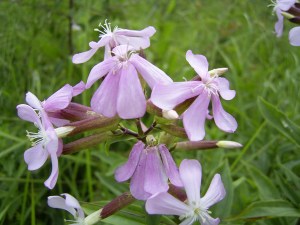
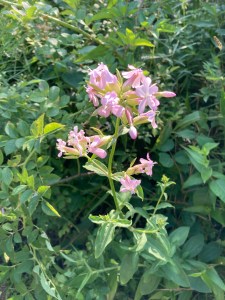
Saponaria officinalis, known commonly as soapwort, bouncing bet, crow soap, wild sweet William, and lady by the garden gate, is blooming everywhere now in Wellfleet.
Although it’s a perennial, I don’t notice it most of the time amidst multiflora rose, blackberry Virginia creeper, bayberry, and other plants. Then it bursts on the scene in August, stealing the scene from all the rest.
Soapwort shines in various shades of pink and purple, brightening the path, and adding yet one more reason to walk in the woods and avoid driving on highway 6.
It can be a very useful plant, too. As the name implies, liquid from the roots and leaves can make a gentle soap. It’s especially handy for delicate woolens or dry skin, and was possibly used to clean the Shroud of Turin.
It’s also used as an emulsifier in the preparation of tahini & halvah, and for brewing beer with a good head.
Many of us grew up playing the Animal, Vegetable, Mineral? game. You had to guess an object, knowing only which of those three categories it fell into. Animal and vegetable (plant) were supposed to cover all living things.
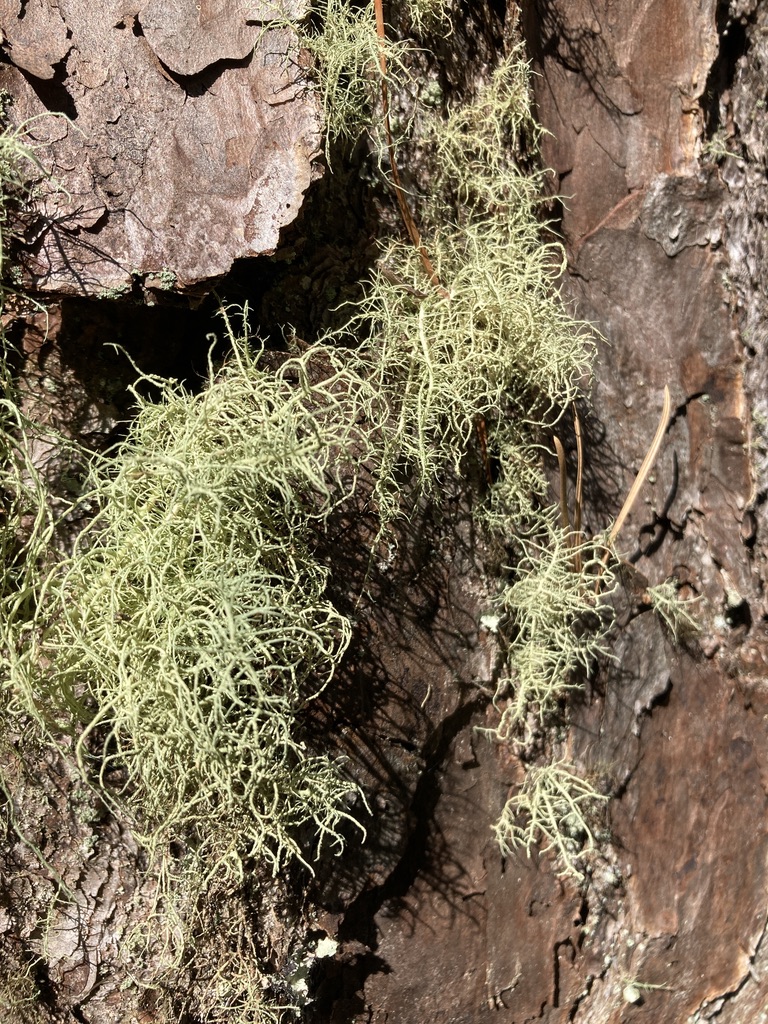
Beard lichen (Usnea), a genus of fruiticose lichen
But what if you came across some living thing that was neither animal nor vegetable? What if the thing you found looked like a plant, but wasn’t; looked like a single organism, but wasn’t; could appear as a mineral of some sort, but was full of life?
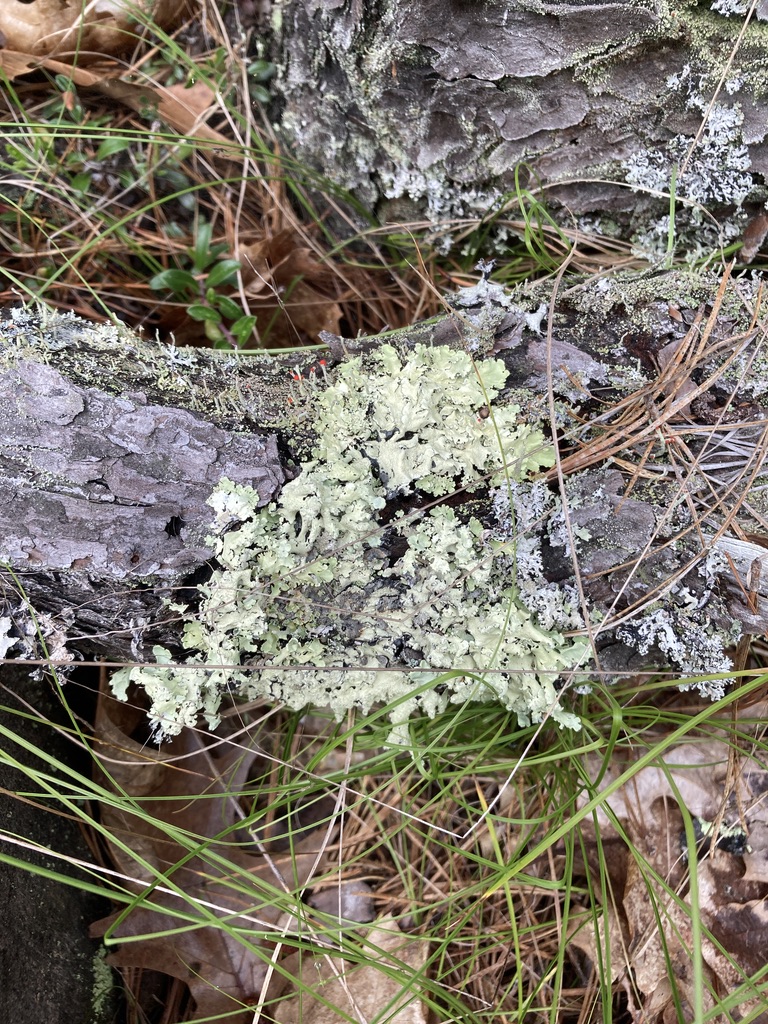
Powdered ruffle lichen (Parmotrema hypoleucinum); a foliose type
You could be looking at one of the most interesting phenomena on Cape Cod, but one that is often overlooked, even by those otherwise expert about birds, trees, wildflowers, turtles, mammals, mollusks, insects, and other fascinating flora and fauna.
That strange thing you observe might be a lichen, a composite organism made up of algae or cyanobacteria living among multiple fungi species. The fungi are in a kingdom separate from either plants or animals. That kingdom includes yeasts, molds, and mushrooms. Like animals, they cannot photosynthesize, but acquire food directly or indirectly from plants.
Within a lichen, the fungi provide structure and attachment to a tree, rock, or split rail fence. The algae contain the green pigment, chlorophyll, which gives the green color to the lichen and captures energy from the sun to support. photosynthesis.
One common type you may find is foliose, or leaf-like lichen. Another is fruiticose, reminiscent of tiny fruit trees. There are also crustose, which attach to rocks so tightly that they can’t be removed without destroying them or the rock. They seem like the Mineral in the old guessing game. Some common crustose lichen are bright orange.
Reindeer lichen (Cladonia portentosa); fruiticose
Lichens are gray when the algae components are dead or dormant, but they may turn bright green after a rain. The fungus (which surrounds the algae) soaks up water, causing its to become more transparent, and revealing the green pigment of the algae.
See what you can find the next time you venture onto a WCT trail.
“Beauty is in the eye of the beholder.” So said Margaret Wolfe Hungerford in Molly Bawn (1878). Her sentiment applies quite well to one of my favorite walks, out of the many on Cape Cod.
This one is easy to reach from either end, borderline accessible, and close to my home. But few people would single it out as an outstanding nature walk.
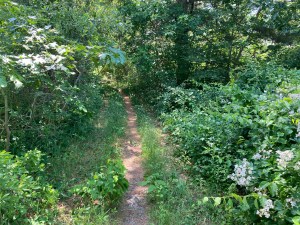
Narrow section along Snake Creek Rd
Snake Creek Road
The walk is along Snake Creek Road, aka Way 672, in Wellfleet. The road was once passable by large vehicles, but due to downed trees, not any more. It’s best suited to walkers, brave runners, and the occasional horse rider.
The road is maintained simply by its use. There are no trail markers, maps, or guide booklets. Some parts are wide and clear; others remind the visitor to wear protection against twisted branches and roots, prickly thorns, and poison ivy. Conditions change with the weather and as tree branches fall across the path.
Canoe launch, showing Phragmites australis
Unlike many trails I’ve enjoyed, Snake Creek Road is not an official National Seashore trail. Nor is it a trail of the Wellfleet Conservation Trust, Massachusetts Audubon, or some other such organization. There’s a road sign, but nothing to indicate that you can, with a little difficulty, walk the 3/4 miles, but not drive it.
There are about ten houses on a bluff above the road. You might be able to hear people on a deck talking, but usually they aren’t close enough for you to hear what they’re saying. Similarly, you’ll be far enough away that they probably won’t see or hear you.
Flora
Snake Creek Road is a great place to explore the question:
Which invasive plant would win if we put them all together in one place?
Snake Creek Road sign surrounded by Rosa multiflora
Here you’ll find bramble, poison ivy, Virginia creeper, autumn olive, both bush and vine honeysuckle, phragmites, broadleaf dock, buckthorn, garlic mustard, oriental bittersweet, black locust, Japanese knotweed, bamboo, and much more. There are also magnificent spreads of multiflora rose blooming in various colors.
In one section there’s a large stand of lily of the valley, both alongside the trail and on the walkway itself. Like many of its partners in the ecosystem, it’s invasive, toxic, medicinal, good for wildlife, and beautiful.
We’re taught to resist invasives and to stamp them out at all costs. Given the choice, I’d prefer a healthy native plant ecosystem. But I can’t help but be in awe of the signs of life bursting through, without the need of harmful fertilizer, herbicides, or constant tending.
Lily of the valley (Convallaria majalis)
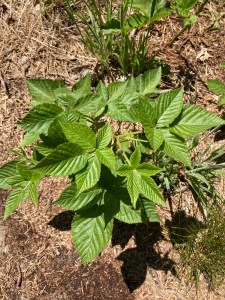
Brambles (Rubus)
Besides, there are also many native plants along Snake Creek, including moss, bayberry, bearberry, beach plum, mayapple, reed grass, black cherry, bear oak, fir, pitch pine, and white pine, to name just a few. There are introduced plants, such as Norway spruce as well.
Best of all, it’s easy to find many prime examples of lichen, including green shield, fishnet, and reindeer lichen. They steadfastly refuse to be placed in a simple category like “flora” or “fauna,” preferring “mycota.” They’re accompanied by wood ears and the underground fungi with their occasional spore-bearing fruiting bodies.
Black oak (Quercus velutina)
40-foot Eastern red cedar (Juniperus virginiana)
The Iris sibirica? pool with irises just beginning to bloom on the little islands
Fauna
Snake Creek is home to all sorts of animals as well––birds, reptiles, mammals, and countless invertebrates. The creek (aka Herring River), despite its degradation from being dammed, is home to various fish, such a the eponymous herring, frogs, turtles, and even river otters.
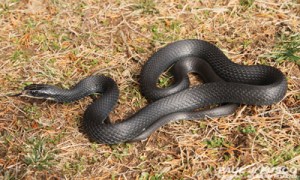
Northern black racer (Coluber c. constrictor). Image from Connecticut Department of Energy & Environmental Protection
On the land side there are coyotes, rabbits, fox, snakes, squirrels, chipmunks, mice, and voles. In addition to many songbirds, I’ve seen swans and great blue herons close up, ospreys and hawks overhead. And many crows. Woodpeckers enjoy the many damaged trees.
When I walk leisurely, I feel that I’m inside a marvelous habitat space like those in some modern zoos. But this is one that’s self-maintaining and ever-changing.
A couple of days ago, as the weather had warmed a little, I almost stepped on a 4-5 foot black racer sunning itself on the trail.
I’ve been especially intrigued to follow the evolution of two dens along the trail. I believe they’re made by coyotes, which I’ve heard at night, but they could be for foxes. Recently they’ve deteriorated without repair, suggesting that the canine families have moved on.
This beholder
I can’t say that Snake Creek is the best 3/4 mile walk anywhere. It’s rather flat and straight, and there are too many signs of degradation from human activity. It will also be changing in a major way soon, with the restoration of the Herring River tidal flow. I expect it to be inundated at high tide after that. It will be a salt marsh habitat and more of a mud flat or at low tide.
Great blue heron? Or sign of human presence?
Moreover, the possibility of getting lost is one of my top criteria for a good walk, and that’s very hard to do on a straight line path with a bluff on one side and a river on the other.
But a walk from one end to the other and back has never failed to yield surprises and contentment that can be found in few other ways.
A friend commented that he had done a lot of hiking and walking on nature trails, but that he’d only recently become aware of the many decisions and the work it took to build and maintain a trail. He would be interested to see what we do with Wellfleet Conservation Trust trails.
We plan these trails to entail minimal destruction to the environment. They should be obvious so that walkers can stay on them without creating social trails through the woods. But we like them to be as unobtrusive as possible. This requires a balance of engineered and natural features.
Visitors from Nepal helping to repair a roped off area at Herring River Overlook
Among other things, we cut overhanging branches that pose a hazard to walkers, but leave any vegetation higher than a Celtics player, unless it’s in danger of falling. We make the trail wide enough for anyone to walk easily, but usually require a single file. We place trail blaze arrows at confusing junctions, but try not to use more than absolutely necessary.
In some places we’ve added stakes and ropes to discourage off trail walking. As enticing as that bushwhacking may be for some, it can be very destructive for the land. For example, at the Herring River Overlook trail, walking down the dune towards the river kills fragile lichen, moss, bearberry, mayapple, violets, sea oats, and other vegetation. That in turn can lead to serious dune erosion.
National Park Service plea, too often ignored
The ropes are easily bypassed, but we don’t want to mar the sites with massive barriers. We have to trust that responsible visitors will recognize the message and stay on the trail.
In many parks today we see the sign that “vegetation grows by the inch but dies by the foot.” That’s especially true on Cape Cod. Tenacious plants can survive despite salty winds off the sea, sandy, nutrient poor soil, and hungry wildlife, but only if we’re on their side.
About 14 years ago, Mojgan Momeni was earning her Master’s degree in Library and Information Science at the University of Illinois. That was the beginning of a saga both tragic and renewing, one involving several people and linking over time. It reminds us of the importance of connecting with nature and others.
I invited Mojgan to share what happened. What follows is the story in her own words:
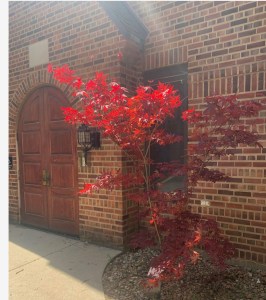
The Japanese maple today in front of the iSchool building
Last month, I came across a stunning photo on LinkedIn of a Japanese maple tree with bright red leaves under the afternoon sun at the School of Information Science. I had been curious for years if the tree was still alive. This was important to me because I had planted it in 2009 in memory of my classmate Yingbo Zhou, who tragically passed away following a hit-and-run car accident on an icy freeway.
Yingbo Zhou
Jill Gengler, Director of Alumni Affairs at the School of Information Sciences, took the shot and shared it. She informed me that the tree had been officially turned into a memorial tree with a plaque (the first bilingual marker on campus). Thanks to the efforts of Professor Kate Williams, Yingbo’s tree is now an official University of Illinois at Urbana-Champaign memorial tree. I am incredibly grateful!
I was also deeply moved by Yingbo’s parents, who gave me a gift as a gesture of appreciation during their summer visit.
I completed my Master’s degree from GSLIS (Graduate School of Library and Information Science) in May 2009. This experience was a significant turning point in my life, and I felt a sense of purpose and direction. That’s why I wanted to express my gratitude by giving back to the school somehow. As a gardening enthusiast, I purchased some perennials and bulbs to plant in a few areas in the school front yard and a young Japanese maple tree. After finishing the design and planting, I dedicated the tree to Yingbo.
The tree in 2009
Planting is one thing, but watering it during an Illinois summer can be challenging. After graduating, my student ID expired, and I could not access the building. Consequently, I had to drive to the new garden daily with water containers from home. I would sit on the stairs hoping that someone would exit the building so I could refill the containers. I felt honored when Chip brought a group of visitors to tour my garden, and shared his positive feedback about it on his blog.
Long story short, I got a job at a software company and relocated to California. I had been curious about the garden and tree for over a decade until I saw Jill’s post by chance.














 Chip's journey