How Bruce Piano Co. nearly lost, then saved Elvis’s career

In the dark recesses of the Bruce Piano Company archives lies a story about a daring rescue of the equally renowned career of Elvis Presley. We can thank this event for the perpetuation of the late Elvis as the King, and led to many Elvis impersonators for years afterwards.

Bertram Camp Bruce

Bertram Camp Bruce (Sr.)

Background

To understand this story you’ll need some background. My father, who founded the piano store, loved music––classical, jazz, big band, solo pop of the Ella Fitzgerald or Bing Crosby varieties––but most assuredly not rock music, country, or Elvis in particular. I imagine much grave-spinning around the thought that his company was to play such a crucial role for Elvis. 

My Dad, however, did not live to see this disturbing event. He died in late 1969. His brother Don, whom he had invited into the business shortly before, took over. But then he died just two years later. Both men were in their early 50’s. My mother remained as the owner of what was by then a struggling business. The growth of electronic entertainments, such as TV and hi-fi, the advent of big box stores, smaller families, and other large societal changes meant that the image of a piano in every middle-class home was fading away.

Although my mother would have been a very good business person (as this story will demonstrate), her upbringing in Georgia nearly a century ago told her that this was not a role for a lady. The same logic would extend to her daughters, who were also busy with family and work. Her son was far away, doing something or another.

A sale of the business seemed to be the obvious path. But there was no willing buyer. Rather than having a distress sale, which would have yielded little, we worked out a deal whereby the manager, Harvey, would buy the store over time, using the revenues the business would generate. Harvey couldn’t have been guaranteed a very good salary. This way he could establish his own pay based on the success he could generate, and in the end, he’d own a business. My mother would be able to draw something from the business that had been the center of the family for many years. The arrangement wasn’t ideal, but was probably the best solution all around. 

Ultimately the broader changes in society did the business in. But for a while, Harvey did his best and Bruce Piano Co. was a going concern. Harvey tried to follow my father’s model, offering a range of instruments, working with piano teachers, assisting the local concert scene, and participating in music conventions. A conflict between the last two of these was what put Elvis’s career in jeopardy. (My children say that I’m prone to exaggerate, but you may rest assured that that is the greatest falsity ever uttered.)

June 15, 1974, Fort Worth, ©James W. Stout

June 15, 1974, Fort Worth, ©James W. Stout

Elvis’s concerts in Fort Worth

The problem was that Harvey had agreed that the store would supply a piano for Elvis’s concerts in Fort Worth. There were to be four productions at the Tarrant County Convention Center. Although Elvis was near the end of his career, and life, and his audience had aged along with him, there was still excitement and adoration for the idol. Fans didn’t mind the $10 ticket price for an hour-long concert, and would love even the shortened versions of his big hits, including “Love Me Tender,” “Fever,” “Why Me Lord,” “Houn’ Dog,” and “Suspicious Minds.”

But then Harvey left for the music convention, without arranging to fulfill the promise to deliver a piano. Elvis’s manager was understandably upset when he discovered that there was no piano on hand. He called the store, only to learn that Harvey was away and unreachable in those pre-cell days. He called Don’s wife Nancy, who didn’t know how to help. He finally called Bert’s wife and my mother, Catherine, the one who claimed that she didn’t know anything about business. 

Obtaining the piano

Catherine began to problem solve. She contacted the piano movers, but they had gone fishing. She pointed out that she had a key to the store, as the still current, if somewhat removed, owner. If Elvis’s team could come up with movers, she could get them in to the piano. 

They met at the store. Elvis sent three bodyguards, who, while not expert in piano moving, were at least strong and committed. But they didn’t know which piano had been ordred. Catherine decided that they wouldn’t go wrong with a concert grand, the biggest model. She found the wooden boxing that was needed to transport a grand piano safely. The team boxed the piano and carried it to the concert venue. After the four weekend concerts the piano was returned safely and Bruce Piano Co, could chalk up another successful service.

Conclusion

Could Elvis have found another piano, or performed without one? Could his career have survived a busted Fort Worth concert? Was the near disaster a sign of the end of both the piano store and Elvis? You’ll have to be the judge of that.

I can say that my mother proved that she could solve a business problem in a difficult and time-pressured circumstance. And I think that my father would have been proud that his company fulfilled its commitment, as long as he didn’t have to go to hear Elvis himself.

Dissertation: The logical structure underlying temporal references in natural language

Bruce, B. C. (1971). The logical structure underlying temporal references in natural language. Ph.D. dissertation, The University of Texas at Austin, Computer Sciences Department. [Note: The archival file is very large; here’s the content in a smaller file size.]

Committee: Norman M. Martin (Co-Chair), Robert F. Simmons (Co-Chair), Michael Richter, Terrence W. Pratt

From the Introduction:

Temporal reference in natural language include tenses and other time relations, references to specific times, and a variety of phrases such as “present”, “later”, “when”, “how often”, and “never”. Their high frequency of occurrence reflects the importance of time to the users of natural language. Although the structure underlying temporal references may appear complicated, it is a working assumption of this thesis that a sound logical explanation of its characteristics can be made.

Continue reading

Summer jobs

This is a summary of some of the summer and part-time jobs I had before going to graduate school at the University of Texas.

  • Programmer. Summer, 1968 (age 21). I was a research assistant at the Institute for the Study of Cognitive Systems at Texas Christian University. The Institute, directed by Selby Evans, was interested in pattern recognition by computer. I wrote a program to produce systematic distortions in black and white images so that we could assess the effectiveness of different pattern detection algorithms (see “Production and control of visual pattern variability by computer”). For example, we could then say that algorithm X could detect a pattern which had been distorted 30% along a particular dimension, but not 40%. The distortions included various versions or rotating, stretching, flipping, or just adding random noise.
Rice University, Psychology
Rice University, Psychology Department

Experimental psychology research assistant. School year, 1966-67 and 1967-68. Psychology department research assistant at Rice University. I helped set up experiments on behavioral conditioning in rats and learned a little about electrical circuit design.

  • Earlier that summer I had a brief job working in an ice house, primarily carrying bags of ice from a conveyor belt to a truck, because there was no machine to do that.
  • orderly2School year, 1965-66. Mail room worker at Rice University. I briefly got to drive the little mail truck until one of the other workers got drunk and smashed it up.
  • Summer, 1965 and 1966 (ages 18 and 19). Orderly at All Saints Hospital in Fort Worth. I learned how to perform various kinds of enemas and catheterizations, work with patients in the psychiatric ward, apply orthopedic weights for patients whose limbs were lifted by ropes and pulleys, and do various other procedures that a teenager with no experience would not be allowed to do today. My co-workers came from all over Fort Worth, representing a variety of backgrounds. They helped open up my world.I read later that Nietzsche was a hospital orderly during the Franco-Prussian War, which influenced his views of life and death, including the development of the idea of Will to Power.200px-apollo_program_insignia
  • School year, 1964-65. Experimental subject for the NASA Apollo program. I was one of three “astronauts” in a simulated three-day mission to outer space. We ate dehydrated space food and carried out mostly boring and repetitive tasks. We each had 11 electrodes pasted on to our bodies to monitor EEG, ECG, and vital signs. One outcome of the study was to learn that paste-on electrodes don’t work after about 2 1/2 days, because the hair grows back.
  • fwzooSummer, 1964 (age 17). Concession stand worker at the Fort Worth Zoo. We sold soft drinks, fries, and BBQ sandwiches. Each morning we had to fill out a squirrel damage report detailing any destruction of supplies due to squirrels and other zoo residents. This started with things like “3 bags of corn chips had chew holes in them.” But we were called in when it began to say, “4 large drinks, 2 BBQ sandwiches, 1 without onions, 3 orders of fries.”My friends Leslie, Ben, John, Hull, and others worked there, too, so we had lots of time to talk about books, life, and our futures. We’d go bowling at lunchtime, sometimes managing to get to the bowling alley, bowl three games, and still get back before the half hour lunch break was over.scuba-diving-03
  • Summer, 1963 (age 16). Researcher for Colonial Cafeterias. My friend John Horan and I used contest entry forms to develop a primitive geographic information system (GIS) representing the source of patrons of the cafeteria. We also scouted out competing cafeterias to assess the level of current and potential business in different areas of town.
  • Also, that summer, a job cleaning public swimming pools using scuba equipment in order to stay under the water longer.
  • ivory-piano-keysSummer, 1962 (age 15). Piano repair at the Bruce Piano Company.
  • Summer and part-time, 1959-63 (ages 12 to 17). Various yard work jobs–mowing, edging, clearing brush, raking leaves, etc.; newspaper delivery
  • Bruce Piano Company

    Bert Sr. in the piano storeBertram Bruce, my father, opened Bruce Piano Company around 1950 in Fort Worth. The store later became the authorized Steinway dealer for Fort Worth and provided pianos for performers visiting the Fort Worth Symphony and Opera. We occasionally got to meet those performers in our home.

    I worked in the West Lancaster store in the summer when I was 15. I remember learning how to buff hammers, replace bridle straps and damper felts, install new hammer shanks, glue on new plastic key surfaces, and generally, restore most other parts of the piano action. I also helped with refinishing, including converting old uprights into mirror spinets. This was mostly on old uprights, some of which were in sad shape after years of abuse in a bar or humid basement. Many of the operations were challenging at first, but even I could learn them after 88 times.

    In the beginning, the store focused on pianos, but later began selling televisions. That led to several robberies in which mostly the new TVs were stolen. This proved to be a great hardship on the small business.

    Bertram BruceThe original location was on Fifth and Calhoun St., in the Binyon O’Keefe Moving Company warehouse. Later the store moved to 8th Avenue near Massey’s, then to the Westchester House where it doubled the space. After that it moved to West Lancaster near Farrington Field. My mother made curtains for the first store and played a crucial role in many other ways to help the young store thrive.

    Later, Bruce Piano Co. opened a second store on Pipeline Road in Hurst, with Ken Nance as manager. Harvey MacDougall became the manager of the main store. The final location was on Inwood, off of Camp Bowie Boulevard. Bert then invited his brother Don to merge his business.

    I remember Don as being an excellent salesman, but like many good sellers, he was an overly willing buyer, too. Rather than insisting on the cash that the store needed, he’d make trades for a boat, a pool table, and once, a donkey. My father had to rein him in from ordering a truckload of the latest amp or band instrument.

    All of this happened shortly before my Dad died on December 12, 1969. Don bought the store after my Dad died and then Harvey took over after Don died. Don, who was two years younger than Bert, also died at age 54, just two years later.  Later Harvey bought Bruce Piano Co.

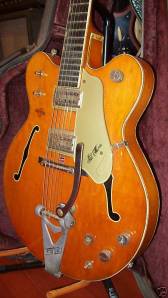
    guitarBruce Piano Co. was a well-known part of Fort Worth for 35 years, offering everything from used and low-cost new pianos for families who wanted their children to learn music to Steinways for visiting performers. There were also practice rooms used by local piano teachers.

    Over the years it also sold sheet music, organs, guitars, band instruments, speakers and amps, televisions, and even once conducted an ill-advised experiment in bagpipes. But changing habits among the public, with the rise of television and music recording devices, meant that piano sales were less and less a central part of middle-class family life. When the Savings and Loan crisis hit in the 1980’s the bank cut off credit for floor planning and the company could no longer survive.

    This is a sad story, but I’m proud of what my father accomplished (with ample help from my mother, Don, and others). I’ve also become more aware of what the store did for the community over many years. There’s a piano in our home with a decal showing that it was once on the floor of Bruce Piano Co. I try to play a little each day, and imagine the others whose lives were also enriched by what the store did.

    Rice University

    Fonndren LibraryMy introduction to Rice was through Joseph I. Davies. I was a visiting high-school student and he engaged me in an unforgettable conversation about the need for world government.

    As a Biology major, I did not take his fabled Biology 100 course, but I did sit in on some of his lectures, including the opening one in which he threw live frogs into the auditorium seats. Amidst all the screams, he would ask “What is life? What makes us know that these objects are living things?” His final lecture of the year, and of his life, was on the meaning of evolution.

    Quetico, August 1963

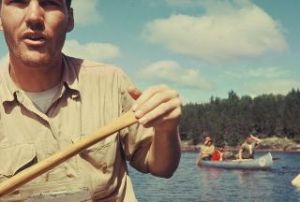
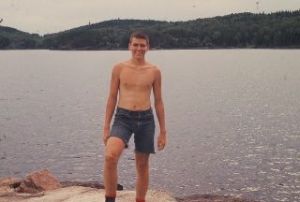
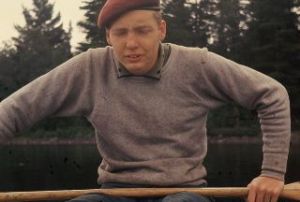
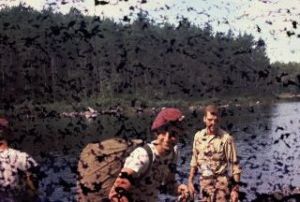
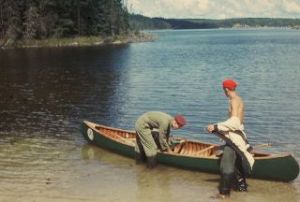
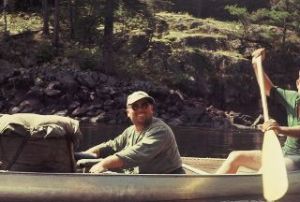
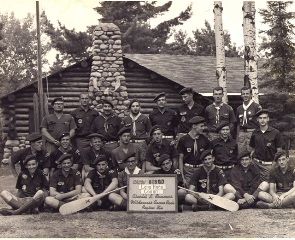
    Here are some photos from my trip to Quetico Provincial Park in August 1963. Notice the water damage on the 35mm slides, which is explained by the story that follows the photos.


    In August of 1963, our Explorer Post 52 traveled to Ontario’s Quetico Provincial Park just west of Lake Superior on the Canada-U.S. border for a wilderness canoe trip. In order to get to Quetico, we journeyed for three days from Fort Worth in what was even then an old, yellow school bus. We stayed in Air Force bases, sleeping on the gym floors and experiencing steam baths for the first time.

    This was a year of changes, including the arrival of the Beatles in the US and the assassination of President Kennedy. But the trip was the major event in my life that year.

    It was a wonderful trip in many ways. We stayed up most of one night watching a rare display of the Aurora Borealis, which filled the sky for hours. The sun was shining, the fishing was good, and there was great singing, story-telling, and endless argument about the meaning of life around the campfires. It was good exercise, too, especially with the canvas packs of those days. On portages, one of us would carry the canoe, one a food pack, which weighed 110 pounds in the beginning, and one all our gear–cotton sleeping bags, canvas tent, and clothes.

    The Storm

    We had been out for at least a week when the storm came up. It was on the Basswood River, but in a wide section, like a long lake. When the storm arrived, we decided not to risk a crossing and pulled into a cave a the base of a huge granite cliff with pictographs. “Picture rock” on Crooked Lake was shown in the September 1963 National Geographic, and I recall seeing the Basswood cliff when I returned from the trip.

    I held my canoe onto the rock under this 100-foot cliff, as did Fred Moyer, our guide. The other two canoes held on to us, locked together to avoid capsizing.

    After a few minutes, I released my grip on the rock for just a moment to tighten my poncho. As I did, lightning struck a solitary tree at the top of the cliff. The current traveled down the cliff to our cave. Everything went suddenly white, for some indefinite period. If you told me today that it was ten seconds or just one, I wouldn’t be able to dispute it, because time didn’t exist for me then. I could feel the charge in the air, and am still sensitive to changing electrical conditions. When I’ve felt that while canoeing, I get very nervous.

    The current reached Fred’s hand, which was still touching the rock. His canoe, which was the only wood and canvas one, was shattered. Bob Cocanower and Gary Rall were the two scouts in Fred’s canoe and they both suffered physical injury from the lightning: Bob’s arms were paralyzed and Gary’s legs. Fred was killed instantly.

    After Fred died, Chuck Borgeson and Duane, the guide from a companion group, took his body to the ranger station (see Bobby’s account, too). I must have gone into shock, because I went to sleep later that morning and slept until the next day. We, of course, cut the trip a short from what was planned originally, but not by much, because there wasn’t an easy way just to exit from such a remote location.

    Aftermath

    The accident was reported in Texas newspapers as “lightning strikes Scout group, at least one killed.” Naturally, our parents were distraught, but unable to learn much about what had happened for several days. This was well before cell phones and we had no portable radio.

    It’s sobering to realize that I was the only one other than Fred holding on to the rock just before the lightning struck. If I hadn’t let go to pull my poncho, all 12 of us might have died, because it would have completed an electrical circuit connecting all our aluminum canoes.

    We managed to complete the trip without further mishap, but aspects of it are still vivid for me today. After the wilderness experience, we went to Winnipeg and found a restaurant that offered all-you-can-eat lunches for 49 cents. After two weeks of vigorous exercise and eating our own cooking of dehydrated potatoes, we were hungry beyond any measure a restaurant should have to endure. It wouldn’t surprise me to hear that we put them out of business.

    References

    Coalson, Bob. The Fred Moyer incident. Post 52 history: Charles L. Sommers Canoe Base.

    Olson, Sigurd F. (1963, September). Relics from the rapids. National Geographic, 124(3), 412-435.

    W. P. McLean Junior High School

    Three years at W. P. McLean Junior High School (now W. P. McLean Middle School) in Fort Worth, September, 1959 – May, 1962. I worked on mythology newspaper in Miss Dierdorf’s class, and later on the school newspaper, The Thresher.

    William Pickney McLean Junior High School first opened on January 28, 1936. The school was located at the corner of Forest Park and Berry Street, the present sight (sic) of R. L. Paschal High School. McLean Junior High School moved to its present location on Stadium Drive in September, 1954. In September of 1969 it was renamed McLean Middle School. McLean’s first principal was Mr. E. E. Dyess, who served for 22 years as the principal. In 1954, the McLean Letter “M” Award was begun …[to be] presented to 8th graders who who excel in scholastic achievement, good citizenship, and extracurricular involvement. –School History, William Pickney McLean Junior High School