
Ontario’s Quetico Provincial Park, alongside Minnesota’s Boundary Waters Canoe Area Wilderness, forms the world’s largest international area dedicated to wilderness recreation.
Many people, even those who were able to go just once, describe a trip in Quetico/BWCAW as one of the most significant experiences in their lives. The area represents a significant portion of the remaining wild space on the continent, or for that matter, accessible wilderness area on the planet.
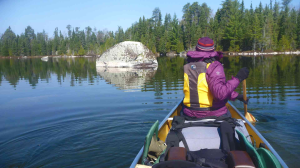
Its destruction, through copper and nickel mining by Chilean mining giant Antofagasta is a crime against the future, against nature, against science, and indigenous people, not to mention any notion of stewardship of our natural resources
Worse than rounding up people for imprisonment in El Salvador or South Sudan without trial? Worse than ending health care for millions of people? Worse than destroying the pillars of democracy? No, but a planned, unnecessary disaster, a tremendous, irreplaceable loss nonetheless. It’s part of “our” national budget bill, the one that most Congress people voted for, but never read.
See more here: Minnesota’s Boundary Waters are pristine. Trump’s ‘Big, Beautiful Bill’ could pollute them forever
My two major trips to Quetico published in Outpost
1963, where tragedy strikes amidst incredible natural beauty: https://outpostmagazine.com/quetico-part1-bertram-bruce/
2015, a return, 52 years later, to portions of the same route, including the treacherous picture rock https://outpostmagazine.com/quetico-part-2-bertram-bruce/
 Chip's journey
The thought of copper and nickel mining threatening a place like Quetico is devastating — it’s more than just losing land, it’s erasing culture, memory, and an irreplaceable wild sanctuary. Reading this brought me right back to my own treks in Nepal — those moments on the trails to Everest Base Camp where the silence, the mountains, and the raw beauty make you feel deeply connected to the earth. I can only imagine Quetico feels the same.
That’s why it hurts so much to think of places like this being destroyed. In Nepal, we fight hard to protect our trekking routes and mountain villages, because once that wilderness is gone, you can never get it back. Your words really reminded me why these wild spaces matter so much.
https://www.himalayaheart.com/trip/everest-base-camp-trek
LikeLike
I loved reading you accounts about visiting this place! But it is so disheartening to read about the thre
LikeLike
Chip: I am so glad to see you posting. So you must be up and around…and chasing young people! Interesting you should share about this particular area. My son-in-law (married to Bob’s daughter Sue) is from Minnesota and also very involved in scouting with both his son and daughter (They live in California now), but last summer he and Ryan, oldest, took a scouting trip through I think this same area and Zoe (daughter who just graduated this week from middle school) will do the same trip this year. I am going to send this on to them. It’s also interesting you should send this because, I just heard Robert MacFarlane speak (receiving environmental writing award from the Thoreau Society)–I am assuming you’ve read his work, but if you haven’t, run don’t walk to the nearest library, and pick it up. He was talking about his newest book “Is a River Alive” in which he reports on visiting 3 rivers with interesting issues re: their aliveness. One of them runs through Quebec Province–the Mutehekau Shipu–or the Magpie in English. He provides a lot of information about the hydraulic issues in Canada, which helped me to understand why it is such a big deal if Trump were to put tariffs on the electricity we import from there, but also much on why this area needs to be protected. We’ve been dealing with dog decline for some time, and it’s reaching the tipping point. Nora’s back legs were not working (the pug mutation issue), but she does like running around back in her wheel chair now if there are sufficient treats to run for. However, the cancer that has metasticized to her lungs is the big problem. There are signs that we have to make the decision to have her put to sleep in the next few days, but now we learn the Vet’s office is two vets down and struggling to keep up with just what was already scheduled. I have finished up the developmental edits on the memoir and I really like the changes suggested by the editor I hired–so pleased with that. I am now working with a person who helps “creatives” organize their platforms, and that’s been extremely challenging. I thought it would be easy, but it’s turning into massive identity work around my past and how to represent the issues of the memoir in the context of my umbrella theme (whatever that will be). This has been worse than trying to hammer out my dissertation question! But it’s leading me in interesting new directions and ways of thinking about how the internet is shaping creation and distribution of text products. Bob has been good. No infections or unexpected health issues, but he is increasingly fatigued. He will be 87 this week so it’s not anything special that needs medication or a hospital stay. Ah well…Luckily he is still producing great quilts that are piling up here. But back to Robert Macfarlane who gave an incredible talk (that was videostreamed by the Thoreau Society), which I think you can find on their web site. The audience questions were great too. I was so thrilled that I am going to join the Thoreau Society–and go to their July meetings that will feature Camille Dungy author of “Soil”. I hope this is turning out to be a great summer with Emily, Charlotte, Rose, and probably Stephen soon. I know it’s been a bit rainy, but at least here it’s off 3 days then on 3 days. Glad you are blogging. Sending all my best to you and Susan. Judy Judith Davidson, Ph.D. (she/her/hers) Professor Emerita: University of Massachusetts Lowell: School of Education Instagram: judith_a_davidson Amazon Author Page: https://www.amazon.com/author/judithdavidson Lowell, Massachusetts Living on the unceded land of the Pennacock Tribe of the Wabenaki Confederacy
>
LikeLike
Good for you!
>
LikeLike