Re-Connecting with Community

Nick and me

On March 5, National College of Ireland hosted an event to consider the relations between third-level education and the communities around them. Emma Kytzia and Beatrice Cantalejo did a terrific job putting it all together.

Nick Rees (left) presided. I was asked to speak on “A Radical Vision for Third-Level Education Today: Re-Connecting with Community.” The lecture was followed by a panel discussion, guided by Paul Mooney, then questions from the audience, and finally, conversation over wine in the President’s office.

I drew from two examples in the Chicago area, Hull House and Paseo Boricua, to examine how educational institutions can re-connect with community. There was a little about current work with the College and the local schools in the Docklands community around widening participation in higher education.panel

The real focus of the evening was on how these experiences might inform education and community work in Dublin today. An excellent panel took up that topic:

  • Mr Ken Duggan, School Principal, Westland Row CBS
  • Prof Áine Hyland, former Professor of Education and Vice President (Academic), UCC
  • Mr Seanie Lambe, Director, Inner City Renewal Group
  • Ms Michele Ryan, Head, School of Community Studies, National College of Ireland

Further Information:presenters

    Thoughts for today

    “Books are no substitute for living” (May Hill Arbuthnot), but “Life without books is empty” (Isaac Asimov)

    “To feel the meaning of what one is doing, and to rejoice in that meaning; to unite in one concurrent fact the unfolding of the inner life and the ordered development of material conditions–that is art” (John Dewey)

    “It is better to know some of the questions than all of the answers” (James Thurber), but “The best way to find things out .. is not to ask questions at all…if you sit quite still and pretend not to be looking, all the little facts will come and peck round your feet, situations will venture forth from thickets, and intentions will creep out and sun themselves on a stone” (Elspeth Huxley)

    “One’s work should be a salute to life” (Pablo Casals, from “Salute to Life”)

    Maramureş

    Barsana Monastery church I’m attaching a couple of photos from Romania, where we went in September. One is a wooden church in the Maramureş style. It’s part of the Barsana Monastery. Another was one of many hitchhikers we picked up. Our old Dacia wasn’t much as a car, but it beats walking or horse-drawn cart when you’re tired. We had learned enough Romanian to figure out that the man is 82, has 9 children, and knows the woman who works in the post office and runs our B&B. We also saw what may be the oldest, and is certainly the longest-running Unitarian Church (in Cluj-Napoca). I spent an hour with the pastor, learning about their history and the church building and furnishings.

    In Maramures, we saw Elie Wiesel’s home/museum. As you friend in Botizamay know, Maramureş was one of the worst holocaust sites, with over 20,000 Jews from Sighetu-Marmaţiei alone sent to Auschwitz. Later, Communists in Romania sent tens of thousands of “Saxons” (ethnic Germans) to work and die on the Danube canal construction. Roma people managed to be persecuted throughout, and still suffer from prejudices today (although projects such as Şanse Egale are working to improve opportunities).

    We also saw the museum sometimes called the “Museum of Suppressed Thought”, which made me aware that my imagination is limited in conceiving all the ways people can oppress one another, and all the different ethnic prejudices that can be realized. Maramureş and Transylvania in general have seen more than their fair share. That’s especially disturbing to think about in a country which is otherwise so beautiful, friendly, and welcoming.

    I gave a talk on Dewey, Hull House, and Paseo Boricua at the Philosophy of Pragmatism: Salient Inquiries conference at Babeş-Bolyai University in Cluj-Napoca. I’d certainly value any comments or suggestions on the draft.

    Tour of Paseo Boricua during AERA

    speaker

    John Dewey Society Sponsored Off-Site Program

    Date: Wednesday, April 11

    Time: 4:30 p.m. – 9:30 pm

    Location: Puerto Rican Cultural Center, 2739-41 W. Division Street

    Cost: $30 (includes bus transportation, program, and dinner)

    Transportation: A bus will collect participants from the front of the Fairmont Chicago hotel at 4:30 p.m. and return there at 9:30 p.m.

    Paseo Boricua, with its motto of ‘live and help others to live’ is renowned for its multigenerational and holistic community activism around human rights and social change and, in particular its model of learning in which ‘the community is the curriculum.’ With its many academic partnerships, Paseo Boricua also provides an outstanding example of university-community collaboration in research, teaching and public engagement.

    The one-hour tour will visit the Puerto Rican Cultural Center and key organizations in the neighborhood, including the community library and media center, the Family Learning Center, Café Teatro Batey Urbano, and the Dr. Pedro Albizu Campos Puerto Rican High School. The tour is followed by dinner and a program presented by the National Boricua Human Rights Network: “Political Repression and Human Rights in the Puerto Rican Context.” Special speakers at the program include Dr. Luis Nieves Falcon, noted sociologist and educator who has played a leading role in the campaign to free Paseo Boricua’s political prisoners.

    Organizers: Bertram (Chip) Bruce, University of Illinois at Urbana-Champaign, chip@uiuc.edu; Laura Ruth Johnson, Northern Illinois University (lrjohnson@niu.edu); Alejandro Luis Molina, National Boricua Human Rights Network and Dr. Pedro Albizu Campos Puerto Rican High School (alejandro@prcc-chgo.org); and José E. López, Executive Director, Puerto Rican Cultural Center.

    Please RSVP to Chip Bruce: chip@uiuc.edu; 217.244.3576

    Pragmatism in Romania

    On September 26-29, 2007, the second international pragmatism conference will be held in Babes-Bolyai University, in Cluj-Napoca, Romania: The Philosophy of Pragmatism: Salient Inquiries. I’ve proposed speaking on the following:

    From Hull House to Paseo Boricua: The Theory and Practice of Community Inquiry

    The social settlement called Hull House provided services including kindergarten facilities, an employment bureau, an art gallery, libraries, a cooperative residence for working women, the first Little Theater in America, a Labor Museum, and a meeting place for trade unions. Hull House exemplified John Dewey’s version of pragmatism, requiring a faith in “the potentialities of human nature.” In our work on “community inquiry,” we have attempted to continue that spirit through social action projects in which a key question is “What happens when community members are not merely recipients of services, but as Dewey argues, become part of the process of authority?” The talk focuses on the theory of community inquiry and our work with Paseo Boricua (Chicago), a modern-day version of Hull House.

    Map

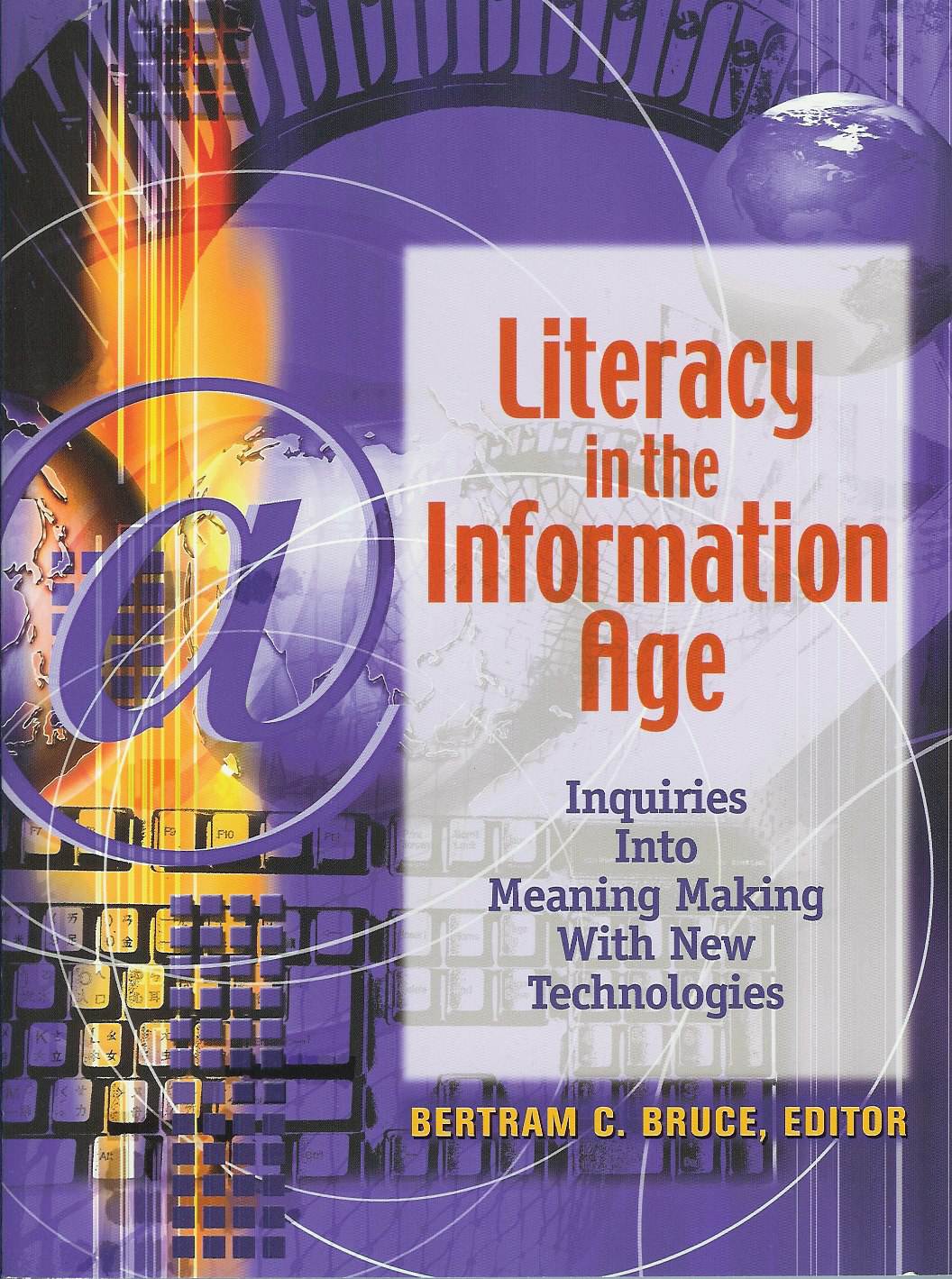
    Literacy in the information age: Inquiries into meaning making with new technologies

    liabookEducators today want to go beyond how-to manuals and publications that merely celebrate the many exciting new technologies as they appear in schools. Students are immersed in an evolving world of new technology development in which they are not passive recipients of these technologies but active interpreters of them. How do you help learners interpret these technologies as we all become immersed in the new information age? Continue reading

    JAAL Technology Department

    During 1997-2002, I edited the Technology Department in the International Reading Association’s Journal of Adolescent and Adult Literacy (JAAL). The columns were intended to promote dialogue about new communication and information technologies and to explore what these media mean for literacy and literacy educators. Each had several distinct sections, including an “email” message from me, an “issue of the month,” often written by a guest author, descriptions of selected websites, and a glossary. In addition to the print version, each column appeared in the Electronic Classroom section of Reading Online.

    The columns have now been collected into a book, Literacy in the Information Age: Inquiries into Meaning Making with New Technologies (2003, Newark, DE: International Reading Association).

    Curriculum & Instruction

    I was a Professor in the Curriculum & Instruction department, in the College of Education, at the University of Illinois at Urbana-Champaign from 1990 to 2000. I taught courses such as

    • Computer Assisted Instruction,
    • Classroom Science,
    • Inquiry Teaching and Learning,
    • Evaluation of Information Technologies,
    • Ethical & Policy Issues in Information Technology,
    • Discourses of Science,
    • Technologies for Learning,
    • Reader Response Criticism,
    • Children’s Composition,
    • Social Contexts and Functions of Writing,
    • Epistemology and Education,
    • Teacher Communities, and
    • Discourse Across the Disciplines.

    Dissertation: The logical structure underlying temporal references in natural language

    Bruce, B. C. (1971). The logical structure underlying temporal references in natural language. Ph.D. dissertation, The University of Texas at Austin, Computer Sciences Department. [Note: The archival file is very large; here’s the content in a smaller file size.]

    Committee: Norman M. Martin (Co-Chair), Robert F. Simmons (Co-Chair), Michael Richter, Terrence W. Pratt

    From the Introduction:

    Temporal reference in natural language include tenses and other time relations, references to specific times, and a variety of phrases such as “present”, “later”, “when”, “how often”, and “never”. Their high frequency of occurrence reflects the importance of time to the users of natural language. Although the structure underlying temporal references may appear complicated, it is a working assumption of this thesis that a sound logical explanation of its characteristics can be made.

    Continue reading