Technology in Docklands Education

One of the most interesting experiences for me this year in Dublin was to work with Abi Reynolds and Leo Casey on the Technology in Docklands Education (TIDE) project. The aim was to meet with 24 Docklands-area schools and other partners to investigate the current use of technologies in teaching and learning, to document their experiences, and to report on current and future needs. Most of the schools are in one of the DEIS categories (officially disadvantaged). You can see the entrance to one of the TIDE schools, the St. Vincent’s Girls School on North William St., in the first photo.
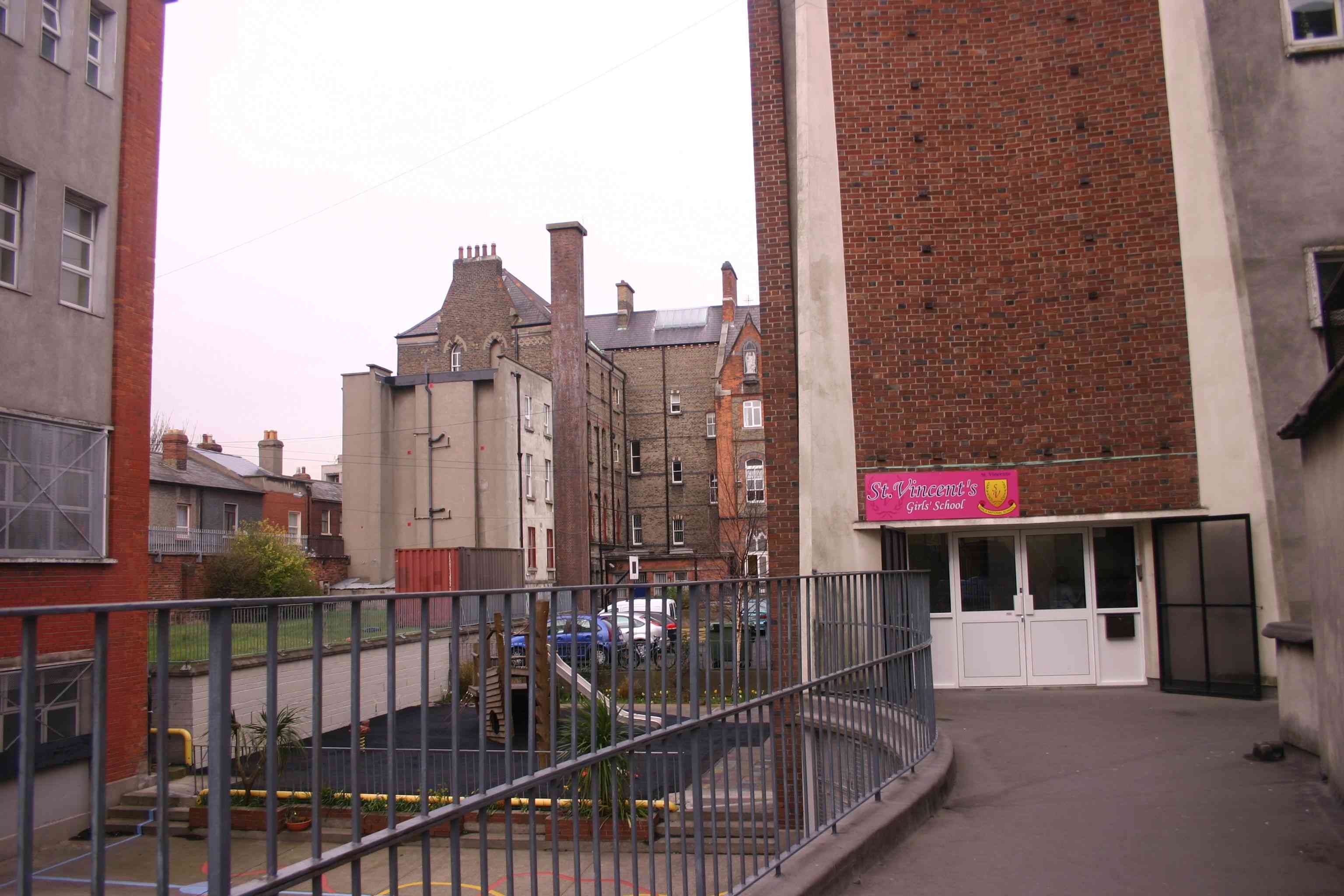
St Vincent\'s, North William StThe research design involved face-to-face interviews with principals and teachers, followed by an online survey. We learned about the school library, computer resources, interactive whiteboards, digital cameras, and other resources. We also observed some ICT-based activities in the classrooms or neighborhood.

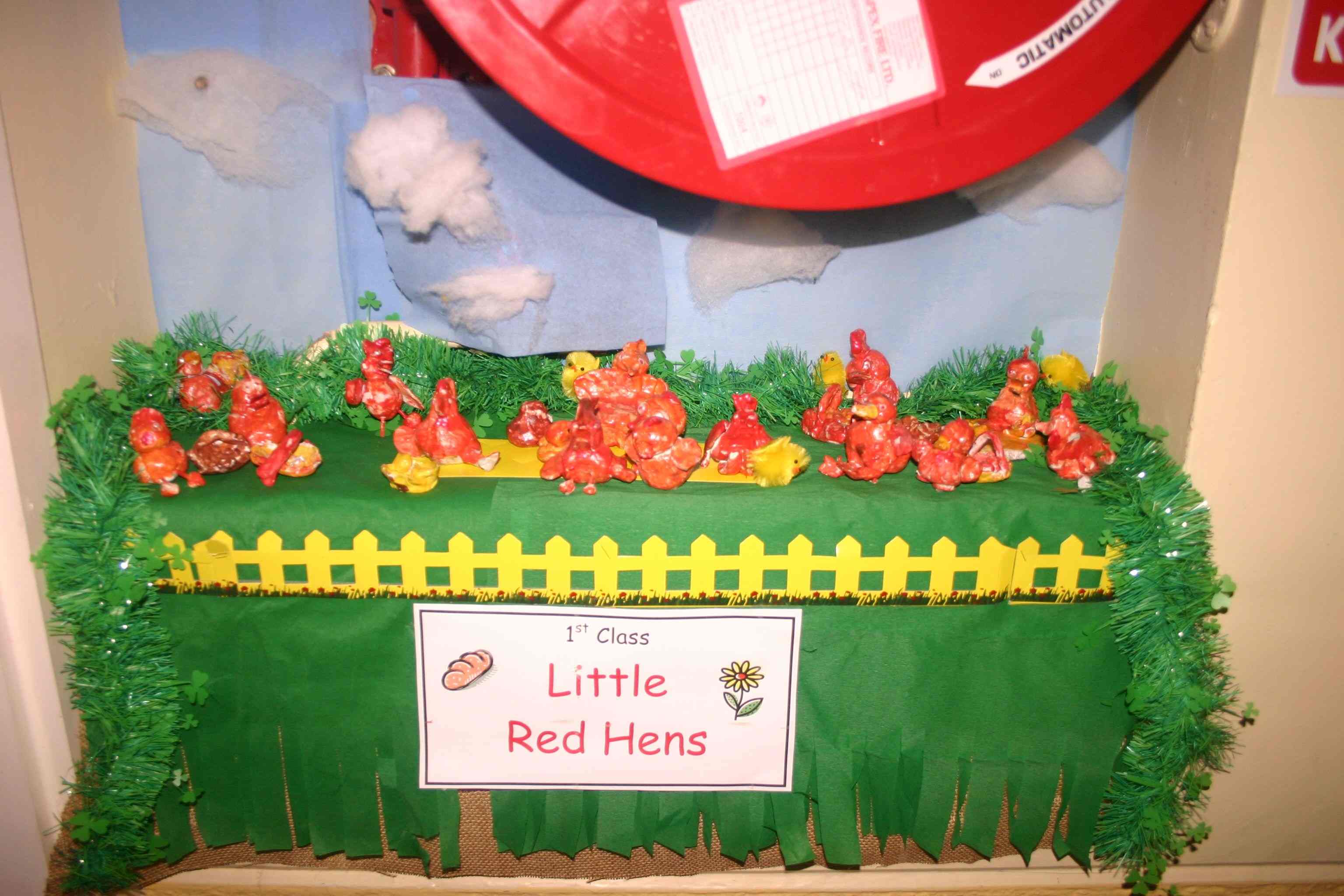
For the analysis, we used scenario-based design (Carroll & Farooq, 2005) to describe the current situation and to identify needs. This led to producing scenarios of use—stories about exemplary projects, such as a stop-action animation involving Little Red Hens (see second photo). We also identified scenarios of support—stories of ways that the schools could be helped to enhance learning.

Visiting the schools gave me a good sense of education in inner-city Dublin, but also of the local communities. I became familiar with landmarks such as Five Lamps, Sheriff Street, and Ringsend, and learned about how Fairview Park near the River Tolka originated through landfill.
Many of the joys and challenges in the schools seemed similar to what I’ve seen in schools in China, Australia, Russia, the US, etc. But I also found myself expecting to be surprised as each school revealed its own special identity. One Principal told us that they had a large population of Filipino children, in part related to the demand for health care workers in the nearby hospitals. He said it had transformed his school, with all of the children becoming more interested in language, culture, and geography.

References

Bruce, Bertram C., & Reynolds, A. (2010, February, in press). Technology in Docklands education: Using scenarios as guides for teaching and research. Educational Studies, 36(1).

Carroll, J. M., & Farooq, U. (2005). Community-based learning: Design patterns and frameworks. In H. Glllersen, K. Schmidt, M. Beaudouin-Lafon, & W. Mackay (Eds.), Proceedings of the 9th European Conference on Computer-Supported Cooperative Work (Paris, France, September 18-22, 2005), pp. 307-324. Dordrecht, The Netherlands: Springer.

Our presentation to the Principals and teachers:

The Fís Book Club

Fis Book Club

The Fís Book Club has received an enthusiastic response from schools here in Ireland, and now in the UK. Fís means “vision” in Irish, and also stands for Film in Schools. It’s been developed at the Institute of Art, Design, and Technology in Dun Laoghaire.

The Fís Book Club is essentially a web-place where children post video book reviews based on their independent reading. The methods for making and posting the reviews are simpler and more straightforward than on other sites I’ve seen, thus allowing the focus to be on the reading and response.

The collected video book reports form a child-friendly online video Book Review Catalogue, which is accessible only to the participating schools. Teachers and children within the project can watch the videos of other children’s book reviews, find books they might like to read, or compare responses. There are no advertisements in the site.

Learning at work seminar

Learning at Work Seminar

The National Centre for Partnership and Performance (NCPP) and National College of Ireland are today hosting the Learning at Work Seminar: Practical Responses to the Future Skills Challenge.

Participants will discuss responses to the challenge posed in video case studies, as well as learn about:

  • Organizing learning opportunities
  • Public and private-sector workplace initiatives
  • What motivates people to take up skills courses
  • How to nurture a learning culture
  • Blended learning

My slides are below:

Make your own electronic whiteboard

One of the more interesting, and on-going, inquiries around technology and learning is related to a device–a low-cost, multi-touch, interactive whiteboard using a Wiimote. As most people know, an interactive whiteboard is a large interactive screen on which a projector can mirror a computer’s display. Users can then control the computer using a special pen, finger, or other device. They’re used in a variety of settings including classrooms at all levels, work groups, broadcasting, etc., but cost thousands of dollars. A Wiimote is the remote controller from the Nintendo Wii computer game, which costs just a few hundred.

Johnny Chung Lee, a graduate student at Carnegie Mellon University, has a variety of interesting projects involving human-computer interaction. He discovered a way to build an interactive whiteboard using a Wiimote. His version is portable and can be built for a tiny fraction of the cost of a commercial whiteboard. He’s recently come out with the Wiimote Whiteboard v0.2.

Lee’s inquiry continues with his writing and reflections in his blog, procrastineering. There he writes:

One of the great, unexpected, and perhaps most influential aspects of creating these videos has been how many people they have inspired and sparked an innovative spirit in. I’ve gotten hundreds of emails from young students that express this enthusiasm. But, perhaps one of the best testimonials is this news article about kids in the Clara Byrd Baker Elementary School’s Lego Club in Williamsburg, VA. The students there, led by Kofi Merritt, are getting excited about innovating in technology by creating their own electronic white boards.

Merritt worked with four fifth-graders and a parent volunteer to build the whiteboard. It’s a great example of making the tools for one’s own inquiry.

Rothesay, Isle of Bute, Scotland

rothesayLeo Casey and I just traveled to Rothesay, Isle of Bute, Scotland, where we went for a day of writing on digital literacy with Allan Martin. As you can see in the photo, it’s a beautiful island, harbor, and town.

We stayed in the Victoria Hotel on the seafront just below the church to the left and worked in a house also on the seafront, behind the white ferry in the center of the harbor. There was time for a walk in the hill above the harbor, and a Chinese meal in the town center,

The night before was in Glasgow where managed to visit the famous Horseshoe Bar. I have a big presentation tomorrow, a keynote at the inaugural International Professional Development Association meeting, which will be held at St Patrick’s College in Drumcondra, Dublin.

Best stories for digital story (re-)telling

Digital storytelling can be for any kind of story, but one application I see a lot in schools is essentially responding to a story by retelling it in a digital form, often with interesting rewriting done by the students. This is carried out using software such as Comic Life or PhotoStory, or sometimes with full video. There’s often the use of clay or puppet animation.

I’ve seen all sorts of stories and media used, such as claymation in a 1st-grade class around The Little Red Hen or in a third grade around The Three Little Pigs. You can see in my blog a post about The Hundred-Mile-An-Hour Dog in a fourth grade.

A teacher asked me whether there were any best stories for this, especially in the context of introducing the technology to other teachers. Other than thinking that stories with distinctive characters and action plots lend themselves well to digital storytelling, I hesitated to recommend any particular stories. But he wanted to have some suggestions of what has worked well, or is likely to work well, in terms of engaging students and making good use of the media.

Do you have any experience with this, or suggestions about his question?

Ching-Chiu Lin, who works in this area, says:

I thought about an article in Art Education that discusses ways that illustrators tell stories in picture books, such as pace of turning the pages and arrangement of images (see below). Instead of seeking exemplary books for teachers to use, another suggestion is to think about the possibilities of transforming/applying these artistic storytelling styles into digital form.

For example, David Wiesner’s Tuesday and Flotsam (style of combination and arrangement of images) may encourage students to write their own unique stories (scripts) based on the same images they view. The use of diagonals and geometric patterns in Gerald McDermott’s Anansi The Spider may be easy for younger students to making their videos by using the collage style animation. Or students can use a story from one book and represent it by borrowing another book’s style.

This line of thinking may help teachers not only thinking about the story itself, but also ways of presentation, learning objectives, and learners’ prior knowledge.

Eubanks, P. (1999). Learning to be a connoisseur of books: Understanding picture books as an art medium. Art Education, 52(6), 38-44.

Dáil na nÓg Fairsay campaign

The Youth, Media and Democracy conference concluded yesterday at Dublin Institute of Technology. There was an excellent program, with presentations from youth groups using a variety of media–film (documentaries, personal stories, what-ifs), comics, hip hop, remix (VJ-ing, web video mashups), object animation, radio, and more. There were also interesting talks about the Fresh Film Festival, media policy, the 5th World Summit on Media for Children held in Johannesburg, the Story of Movies, Digital Hub FM, and much more.

I was also impressed with the Dáil na nÓg campaign to encourage mainstream media to provide more balanced coverage of youth, especially to show the diversity of youth activities and not just negative images. A small group of Dáil na nÓg representatives has conducted this campaign, called Fairsay. They’ve had multiple meetings with media and policy makers, assisted by Anne O’Donnell from the Office of the Minister for Children.

Dáil na nÓg means “youth parliament”. Young people come as representatives of their local area to tell decision makers in Government what they think of issues that affect their daily lives.

The young Dáil na nÓg representatives gave excellent presentations and participated fully in panel discussions, demonstrating by their presence how young people can learn social responsibility, communication skills, and connected understanding through active civic participation.

So, it’s ironic that the Fairsay work is only partly sanctioned by the schools. For example, when they were waiting for a media callback they had to have their mobile phones on vibrate during class. When a call came it had to be taken down the hall in the study room. The classroom might be a place to teach about government or media, but not to actively engage with it.

Any teacher knows the many distractions available today for young people, mobile phones being near the top of the list. Still, it’s unfortunate that we can’t find better ways (this applies to US schools even more) to make actually participating in democracy take precedence over just talking about it. The young people at the conference showed how they could use media in diverse ways to move beyond the spectator role to become active participants.

Slow learning

Many people would say that new technologies speed up life, indicated by terms such as “fast forward” or “multitasking.” The same people might add that because young people live in a fast-paced, digitally-enhanced world, we need to change schooling accordingly. If we don’t use technologies to match their pace, we’ll lose them. Moreover, there is so much more to learn today. We need to use podcasts, mobile technologies, video, on-demand resources, blogs, SMS, and other tools to speed up learning for the millenial generation.

Other people question the rush to new learning technologies. They argue that it’s good to learn in a slow, considered, and reflective way. Better to immerse oneself in a book, to read, even re-read difficult passages. Schooling should counter, not acquiesce to, the blur of modern life.

This debate is unlikely to reach an easy resolution. But as is often the case, the polar opposites here share some unquestioned assumptions. Both seem to think that the new technologies accelerate; they just disagree about whether that’s a good or bad thing.

However, when I’ve observed learning in classrooms with a thoughtful use of new technologies, I’ve often seen the contrary: Learning seems stretched out or slowed down. For example, in my last post about The Hundred-Mile-An-Hour Dog, I talked about a primary-level class doing digital storytelling around a book they had read. They built dioramas for scenes in the story, constructed clay figurines for the characters, photographed events in each episode, wrote narration for the scenes, checked grammar and spelling, and eventually created a photostory. This took many class sessions and involved discussions about the story, choices in design and presentation, and referring to the text for details. Certainly the new technologies (digital camera, computer) made it easier to carry out aspects of the project. But the overall effect was to engage the students in a deeper, more critical form of reading and response.

During this time, they didn’t read as many stories as they might have, or write as many words. One might say that their learning slowed down. At the same time it had become more substantive and meaningful. In contrast, their usual activities are sometimes rushed and unreflective.

So now, I’d like to flip the debate. Those who embrace the new technologies need to say that they’re good, not because they accommodate the fast pace of modern life, but because they slow it down. And those who oppose them need to realize that we often use the old tools in cursory, shallow ways which might be corrected with new technologies.

The Hundred-Mile-An-Hour Dog

The Hundred-MIle-An-Hour Dog

I recently re-visited a classroom, which is one of those that give me hope when I’m down about the challenges facing education today. It’s not that everything is perfect; that would seem so unreal as to dis- rather than en-courage. No, it was that the principal, the teacher, and the students were all engaged in learning in productive, connected ways.

The students were ten-year-old boys in a fourth class. They had read The Hundred-Mile-An-Hour Dog by Jeremy Strong. They then used storyboards, clay animation, a digital camera, and online music to create a digital story. There were six groups and each one responded to a different chapter in the book,

The novel was the overall winner of the 1997 Red House Children’s Book Award. You can get an idea of the story from Strong’s description:

Streaker is a dog that can run as fast as a whirlwind. Unfortunately she is badly trained. She doesn’t know her name and doesn’t know what ‘Stop!’ means either. She is driving everyone mad. Then Trevor takes on a bet with nasty Charlie Smugg. Trevor will train Streaker in two weeks, or he will have to bath in a tub full of muck and frogspawn. Can Trevor’s friend Tina help – or is Tina after something else quite different?

When A. and I talked with the boys we had exchanges such as:

A/C: Do you like this?
B: Yes!
A/C: Can you tell us why?
B: Because it’s fun, not work.
A/C: But aren’t you working hard?
B: Well, yes, it’s work, but it’s different.

We also heard, “it’s easier to think in groups,” “[when you have a question] you go back to the story,” and “[when we disagree] we talk it out.” The activity combined art—sketches, coloring, clay figures, collage backdrops; group work—planning, sharing work, dispute resolution; technology—audio files and editing, digital photography, photostory; as well as reading and writing.

The principal says that activities like this—it’s really a whole program—have totally changed teaching and learning in the school. It’s boosted self-esteem and helped the school re-connect with the community. She “can’t imagine the school without it.” The work develops multiple intelligences, fosters project work, leads to integrated learning, and addresses the standard curriculum goals in the process. Teachers learn from each other, and maybe from the children, too,

Youth Media Democracy, April 18-19

Youth Media and Democracy conference[See followup after the event at Dáil na nÓg Fairsay campaign.]

What appears to be an exciting conference on youth, media and democracy is coming up on April 18-19, 2008 at Dublin Institute of Technology and the Digital Hub. It’s called Youth Media Democr&cy, “an inaugural conference exploring the effects and opportunities of new media on children and youth.”

The conference explores the ways that media and ICT’s affect the activities, roles, and relationships of youth, through topics such as new media, emerging literacies, digital divide, representations of youth in media, and new media as a platform for democracy in the lives of young people. It also examines how youth can express themselves through new media and will showcase youth-created media.