Health care illogic

Following Rep. Joe Willon’s (R, SC) outburst druing the President’s speech, the Obama administration has scrambled to show that it will guarantee no reasonable means of healthcare for people in the US illegally. That position strikes many people as sensible. But it’s not only cruel, unfair, and unmanageable, it actually undermines the very effort to secure affordable, reliable healthcare for everyone.

No one in power is even talking about government health care for all (that’s a plan that would really work). Instead, the proposal is simply to require everyone to get health care insurance, through a government-managed insurance exchange, employer-provided group coverage, or private insurance. With a large pool of buyers in the exchange, it’s possible that health care costs could be controlled.

Denying undocumented workers and their families access to both the exchange and employer-provided group coverage means that very few will have insurance of any kind. This, in turn, will increase demands on expensive emergency room care, whose costs are ultimately borne by the government and individuals with private insurance.

Rep. Luis Gutierrez (D, IL) put it this way last week:

So, and remember, we’re not talking about government health care, we’re talking about everybody is going to be required to get health care insurance,” said Gutierrez. “And so as we go to this big store, right, where everybody is required. And this exchange, the health care exchange, where if you don’t have health care you are required to go purchase it. When you go and attempt to purchase it, what does the administration say? The administration says, ‘You will have to prove that you are legally in the United States and have a Social Security number and a right to that.’

Some immigrants, and let me say it – hundreds of thousands of them — who have businesses, who are prospering, who are paying taxes— even when they wish to buy because it’s going to be a requirement to buy it, this administration has told them don’t buy. You can’t. You can’t buy.

via Latino Lawmaker Rips Obama for Making It Harder for Illegals to Buy Private Insurance – George’s Bottom Line

One thing that could make the exchange work is to bring in large numbers of relatively healthy people. New immigrants use 55% less health care than native-born Americans, according to a Harvard/Columbia University study (Physicians for a National Health Program, 2005).

Denying health insurance is foolish and spiteful. It’s also absurd: We should demand that immigrants share the burden of paying for healthcare, not exclude them in a way that ultimately endangers not only theirs, but everyone’s health and finances.

See also The bottom line in health care.

References

Physicians for a National Health Program (2005, July 27). Immigrants’ health care costs are low.

What do Boston & Cambridge have to say to Champaign Unit 4?

violin_may06Ann Abbott inspired me to say more about the connections between the Boston desegregation experience in my last post and that of Champaign Unit 4.

I’d have to say that Boston is a good example of how not to do it. As I said in that post, Judge Garrity made the correct, and only legally justifiable decision, but rulings alone cannot accomplish much if there is widespread resistance, especially from political and religious leaders, school officials, and media. The racism thwarted integration of the schools, and in the process did major damage to the school system and to Boston as a civilized city.

In contrast, just across the Charles River, Cambridge managed relatively successful desegregation during the same period. Cambridge adopted a “freedom of choice” or “controlled open enrollment” desegregation plan in 1981. Parents would specify a list of  the schools they wanted their children to attend. Their preferences were followed as long as explicit desegregation controls could be maintained. There were no guarantees of attending any particular school.

Graham_parksBecause the program was coupled with interesting magnet programs at every school, there were many viable options for families. As parents we almost welcomed the fact that we didn’t have to make the final choice between the Maynard School’s dual language (two-way Spanish-English bilingual) program, Tobin’s School of the Future, with innovative uses new technologies, the Graham & Parks Alternative Public School, with its open education plan (see mural above), or the closer by Peabody, Fitzgerald, or Lincoln schools, each with things to recommend it. It helped that Cambridge did not have the urban sprawl of midwestern cities, which meant that unlike Champaign, Cambridge offered several schools within walking distance.

Although not without its problems, this plan was effective in substantially desegregating Cambridge schools, and maintained public support and involvement with the public schools. It’s not surprising then that Robert Peterkin, Superintendent, was called in as a consultant on the similar plan in Champaign. The story in Champaign is still unfolding (as it is in Cambridge and Boston as well). But if I had to draw lessons today from these three experiences, I’d say that it’s essential for Champaign residents today to avoid the disastrous path of resistance that Boston experienced

champaignThe Champaign school district has been struggling to address concerns such as too many black students in special education and discipline referrals; too few in gifted and honors classes; and black students being bused out of their neighborhoods. Responses such as denying the problems or siting new schools outside of black communities (though still technically north side) remind me of Boston’s response. Everyone would benefit if the school system and residents were to embrace not only the technical details of the Cambridge (or similar) plan, but also the spirit that saw how desegregation could enrich the learning for all.

References

Don’t blame Judge Garrity for the failure of school busing in Boston

W. Arthur Garrity Jr., the federal judge whose order to desegregate Boston’s public schools triggered mob violence and an image of bigotry in the city that prided itself on being the cradle of American liberty, died Thursday of cancer.

Garrity’s death at 79 came two months after the Boston school board voted to end busing for integration, 25 years after Garrity’s order launched a tumultuous period in the city’s history.

via W. A. Garrity; Judge Desegregated Boston Schools – Los Angeles Times.

garrity1I moved to the Boston area on the first of June, 1974. On June 21, Judge Garrity filed a 152-page opinion, in which he ruled that the School Committee of the city of Boston had “knowingly carried out a systematic program of segregation affecting all of the city’s students, teachers and school facilities.” The ruling was unanimously affirmed by the U.S. Court of Appeals. It ordered the School Committee to desegregate Boston schools by instituting student assignment, teacher employment, and facility improvement procedures, as well as the use of busing on a citywide basis. When the Committee failed to present an adequate plan the court assumed an active role in in the desegregation, a role that continued for fifteen years, my entire time of living in the Boston area.

The Community Action Committee of Paperback Booksmith, a bookstore in the area, published the decision in 1974 as The Boston School Decision. Publishing a lengthy court opinion may seem like a foolish business decision, but it was in fact a courageous and consequential act to inform the public debate. I still have my well-read copy.

Following the decision, there was resistance, violence, and white flight. When regular drivers refused to drive buses for schoolchildren out of racism or fear for their own safety, brave people, such as my friend Henry Kingsbury, volunteered to take their place. Given all that and the fact that 30 years later, the Boston schools had become even more segregated than before, one might consider Judge Garrity’s decision to be a failure. A persistent myth arose that this was an example of social engineering gone awry. For example, Bruce G. Kauffmann, in “Judge took Beantown for bumpy ride in 1974” describes it as “a liberal judge’s infatuation with experimental social engineering programs.”

school-busBut Garrity was both courageous and correct. The problem was not his, nor anyone else’s, attempt to engineer social relations. For twenty years after the Supreme Court had ruled that the legal maintenance of segregated schools violated the US Constitution, and even more, the fundamental values of the United States for simple justice, the Boston School Committee and other political leaders steadfastly resisted every attempt at incremental reforms. Ideas about placement of schools, magnet programs, voluntary busing, and so on, which might have led to gradual and peaceful integration, were subverted or outright blocked.

The decision demonstrates conclusively that the School Committee had consistently and deliberately acted to thwart Constitutional guarantees of equal rights, not only maintaining the “separate” aspect of Jim Crow, but failing also at any semblance of the “equal.” Schools designated for Black children were not just segregated, but denied resources in terms of teacher preparation, class size, curriculum, materials, physical plants, and other necessary tools for learning.

Given the entrenched racism, and the clear history of subversion of basic civil rights, Garrity had no choice. Unfortunately, the failure of leadership in Boston, both Black and White, pro-and anti-desegregation, led to undermining Garrity’s decision and the earlier Brown V. Board of Education decision.

References

Garrity, W. Arthur, Jr. (1974). The Boston School Decision: The text of Judge W. Arthur Garrity Jr.’s decision of June 21, 1974 in its entirety. Boston: The Community Action Committee of Paperback Booksmith.

Weinbaum, Elliot (2004, Fall). Looking for leadership: Battles over busing in Boston. Penn GSE Perspectives on Urban Education, 3(1).

Faubourg Tremé

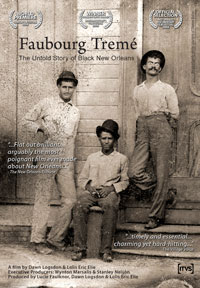
Just to the Northwest of the French Quarter lies a neighborhood that few tourists visit, and many have never heard of, called Faubourg Tremé. Much of the area now appears bleak with Interstate Highway 10 bisecting it, industrial yards, and boarded up buildings. But it’s one of the most important neighborhoods in American history, and still has meaning for today. There are efforts to restore Faubourg Tremé and to learn what it has to tell us.

faubourg_tremeA recent, award-winning documentary tells the fascinating story, made all the more compelling by relating it to the life of a young reporter for the Times-Picauyune. The film is Faubourg Tremé: The Untold Story of Black New Orleans. Reporter Lolis Eric Elie leads us in his discoveries about his own city. He and director Dawn Logsdon show the relation between the city’s present and its rich past, enlivened throughout by music, including Derrick Hodge’s original jazz score, the Tremé Song by John Boutté, and a century of New Orleans music.

Viewers also meet Irving Trevigne, Elie’s seventy-five year old Creole carpenter, who descends from over two hundred years of skilled craftsmen, as well as Paul Trevigne, editor of L’Union, the first black newspaper in the US. L’Union and later, the Tribune, were strong advocates for the abolition of slavery, but beyond that, for full citizenship and social equality for all blacks, something most northern abolitionists shied away from. They hear from Louisiana Poet Laureate Brenda Marie Osbey, musician Glen David Andrews, and historians John Hope Franklin and Eric Foner as well.

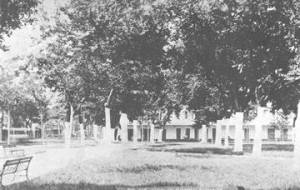
armstrong_park_Congo Squre cFaubourg Tremé was home to the largest community of free black people in the Deep South during slavery, where they published poetry and wrote and conducted symphonies. It was a racially-integrated community, a model for our own future. It as also possibly the oldest black neighborhood in America, the home of the Civil Rights movement and the birthplace of jazz. (See Congo Square to the right.)

Long before Rosa Parks, Tremé residents organized sit-ins on streetcars leading to their eventual desegregation. But on June 7, 1892, Homer Plessy from Tremé deliberately challenged the Louisiana 1890 Separate Car Act, by insisting on sitting in a whites-only car on a commuter train. He was arrested, tried, and convicted and eventually lost in the infamous Supreme Court decision of Plessy v. Ferguson. The resulting “separate-but-equal” decision legitimized segregation throughout the US for the next 62 years, and was a major blow to Tremé.

Following later assaults from urban renewal, Interstate Highway 10, and then Hurricane Katrina, it’s surprising that anything remains in Tremé. But one thing that has survived is a sense of history, embedded deep in the music, dance, architecture, social relations, and stories of the community. It is this history which holds a promise for the renewal of Tremé and perhaps of the larger US Society.

The film is a must-see, telling a story that is simultaneously informative, uplifting, and disturbing.

No tent cities for the wealthy

A continuing saga locally, similar to that in many other communities, is that of tent cities.

St. Mary’s Catholic Church in east Champaign apparently will be the home for the Safe Haven tent community for the next month.

The Rev. Tom Royer, pastor of the church at 612 E. Park Ave., sent a letter to Mayor Jerry Schweighart and the city council, dated Sunday, that “the parish of St. Mary has decided to host the Safe Haven tent community for 30 days.”

“This will give them (residents) additional time to work with you and the zoning commission to find a more permanent location for their community,” wrote Royer, who did not give a date when the tent city would locate at the church.

City Zoning Administrator Kevin Phillips said Wednesday the city still holds that tent cities are in violation of the city’s zoning ordinance, and he said the city would take enforcement action if the tent city does relocate at St. Mary’s Catholic Church.

via Eastern Champaign church takes in tent city residents

The discussions revolve around questions such as whether the tent city would annoy nearby residents, or how long it will be allowed to stay in a particular location. It’s amazing to me how little talk there is about alternatives. What other options are there for people who are down on their luck, often facing physical and emotional, as well as financial challenges? Shouldn’t we be asking ourselves what we can do to provide housing, not how to prevent people from coping?

One can’t help but recall Anatole France’s (1844-1924) famous passage from Le lys rouge (The red lily):

Cela consiste pour les pauvres à soutenir et à conserver les riches dans leur puissance et leur oisiveté. Ils y doivent travailler devant la majestueuse égalité des lois, qui interdit au riche comme au pauvre de coucher sous les ponts, de mendier dans les rues et de voler du pain.

For the poor it consists in sustaining and preserving the wealthy in their power and their laziness. The poor must work for this, in presence of the majestic quality of the law which prohibits the wealthy as well as the poor from sleeping under the bridges, from begging in the streets, and from stealing bread.

The story of stuff

home-diggerAnnie Leonard has created an excellent, 20-minute video+animation that calls for creating a more sustainable and just world: The Story of Stuff with Annie Leonard

The story is told in an engaging, even funny, way, very accessible to children, as it addresses serious environmental and social issues. It discusses the inadequacies of the linear model for the materials economy, which conceives stuff in terms of extraction, production, distribution consumption, and disposal. Annie shows how these mostly hidden processes affect communities in the US and abroad. It’s lively, informative, humorous, and makes us think of the stuff in our lives in a new way.

The story of stuff website has additional resources, and the book will be available March 9, 2010