The possibility of making sense

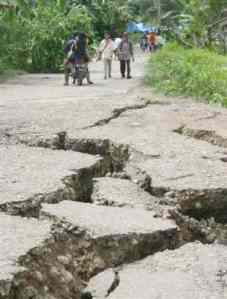
earthquake-imgConnecting learning and life sometimes sounds like a useful accessory for the real business of learning in the classroom. But relevance to life is what makes learning possible.

Emerson (1983, p. 1088) reminds us that we need a reason to learn:

We learn geology the morning after the earthquake, on ghastly diagrams of cloven mountains, up-heaved plains, and the dry bed of the sea.

Frank Smith (2004, p. 182) adds that we need materials or activities out of which we can make sense:

It isn’t nonsense that stimulates children to learn but the possibility of making sense; that’s why children grow up speaking language and not imitating the noise of the air conditioner.

All too often, we struggle to motivate, monitor, and assess learning because students aren’t learning, or worse, the classroom feels lifeless. But that struggle is futile if we don’t face the real problem, that learning needs to make sense, to have an intrinsic purpose for the learner. Paraphrasing Wittgenstein (1958, II, iv, 232), the existence of a repertoire of teaching methods “makes us think we have the means of solving the problems which trouble us.” But the real problem in many formal learning situations is that there is no reason to learn, and “problem and method pass one another by.”

See more about purpose in learning in my post on Education for what is real.

References

Emerson, Ralph Waldo (1983). Essays and lectures. Des Moines, IA: The Library of America.

Smith, Frank (2004). Understanding reading: A psycholinguistic analysis of reading and learning to read (6th Ed.).  Mahwah, NJ: Lawrence Erlbaum Associates.

Wittgenstein, Ludwig (1958). Philosophical investigations, third edition (trans. G. E. M. Anscombe. New York: Macmillan.

Community Inquiry Labs

Inquiry cycle

Inquiry cycle

Community Inquiry Labs (aka CIL’s or CILabs) is rising again!

What is CILabs?

Drawing from the work of John Dewey and others, showing that education begins with the curiosity of the learner, CILabs promotes an iterative process of inquiry: asking questions, investigating solutions, creating new knowledge, discussing experiences, and reflecting on new-found knowledge, in a way that leads to new questions.

In addition to the standard features found on group support sites, such as Ning, Google, Yahoo, and Moodle, CILabs offers a means for building Inquiry Units based on the Inquiry Cycle. Also, unlike most university-supported software there is a secure means for users without university netid’s to participate. This is crucial for university-community collaborations.

CILabs (aka iLabs) are being used currently in courses such as Will Patterson’s Hip Hop as Community Informatics and Martin Wolske’s Intro to Network Systems. Projects such as Youth Community Informatics use it as do a variety of  other projects and organizations.

The redesign

Despite filling a need for many individuals and groups since 2003, use of CILabs fell off after a security hole was discovered in CILabs 3. That led to a temporary shutdown and a major redesign on the Drupal platform.

Thanks to the support of Robert Baird at CITES EdTech, a project to rebuild CILabs was led by Alan Bilansky with Julieanne Chapman as lead programmer. Claudia Serbanuta represented GSLIS and the CILabs user base. The new CILabs is now hosted by the University of Illinois College of Education, thanks to Ryan Thomas and John Barclay. This represents an unusual and successful collaboration across two colleges and CITES, with support from the Center for Global Studies, Community Informatics Initiative and the Illinois Informatics Institute.

I encourage you to give it a try now, and to let us know how to improve it.it

What do Boston & Cambridge have to say to Champaign Unit 4?

violin_may06Ann Abbott inspired me to say more about the connections between the Boston desegregation experience in my last post and that of Champaign Unit 4.

I’d have to say that Boston is a good example of how not to do it. As I said in that post, Judge Garrity made the correct, and only legally justifiable decision, but rulings alone cannot accomplish much if there is widespread resistance, especially from political and religious leaders, school officials, and media. The racism thwarted integration of the schools, and in the process did major damage to the school system and to Boston as a civilized city.

In contrast, just across the Charles River, Cambridge managed relatively successful desegregation during the same period. Cambridge adopted a “freedom of choice” or “controlled open enrollment” desegregation plan in 1981. Parents would specify a list of  the schools they wanted their children to attend. Their preferences were followed as long as explicit desegregation controls could be maintained. There were no guarantees of attending any particular school.

Graham_parksBecause the program was coupled with interesting magnet programs at every school, there were many viable options for families. As parents we almost welcomed the fact that we didn’t have to make the final choice between the Maynard School’s dual language (two-way Spanish-English bilingual) program, Tobin’s School of the Future, with innovative uses new technologies, the Graham & Parks Alternative Public School, with its open education plan (see mural above), or the closer by Peabody, Fitzgerald, or Lincoln schools, each with things to recommend it. It helped that Cambridge did not have the urban sprawl of midwestern cities, which meant that unlike Champaign, Cambridge offered several schools within walking distance.

Although not without its problems, this plan was effective in substantially desegregating Cambridge schools, and maintained public support and involvement with the public schools. It’s not surprising then that Robert Peterkin, Superintendent, was called in as a consultant on the similar plan in Champaign. The story in Champaign is still unfolding (as it is in Cambridge and Boston as well). But if I had to draw lessons today from these three experiences, I’d say that it’s essential for Champaign residents today to avoid the disastrous path of resistance that Boston experienced

champaignThe Champaign school district has been struggling to address concerns such as too many black students in special education and discipline referrals; too few in gifted and honors classes; and black students being bused out of their neighborhoods. Responses such as denying the problems or siting new schools outside of black communities (though still technically north side) remind me of Boston’s response. Everyone would benefit if the school system and residents were to embrace not only the technical details of the Cambridge (or similar) plan, but also the spirit that saw how desegregation could enrich the learning for all.

References

Don’t blame Judge Garrity for the failure of school busing in Boston

W. Arthur Garrity Jr., the federal judge whose order to desegregate Boston’s public schools triggered mob violence and an image of bigotry in the city that prided itself on being the cradle of American liberty, died Thursday of cancer.

Garrity’s death at 79 came two months after the Boston school board voted to end busing for integration, 25 years after Garrity’s order launched a tumultuous period in the city’s history.

via W. A. Garrity; Judge Desegregated Boston Schools – Los Angeles Times.

garrity1I moved to the Boston area on the first of June, 1974. On June 21, Judge Garrity filed a 152-page opinion, in which he ruled that the School Committee of the city of Boston had “knowingly carried out a systematic program of segregation affecting all of the city’s students, teachers and school facilities.” The ruling was unanimously affirmed by the U.S. Court of Appeals. It ordered the School Committee to desegregate Boston schools by instituting student assignment, teacher employment, and facility improvement procedures, as well as the use of busing on a citywide basis. When the Committee failed to present an adequate plan the court assumed an active role in in the desegregation, a role that continued for fifteen years, my entire time of living in the Boston area.

The Community Action Committee of Paperback Booksmith, a bookstore in the area, published the decision in 1974 as The Boston School Decision. Publishing a lengthy court opinion may seem like a foolish business decision, but it was in fact a courageous and consequential act to inform the public debate. I still have my well-read copy.

Following the decision, there was resistance, violence, and white flight. When regular drivers refused to drive buses for schoolchildren out of racism or fear for their own safety, brave people, such as my friend Henry Kingsbury, volunteered to take their place. Given all that and the fact that 30 years later, the Boston schools had become even more segregated than before, one might consider Judge Garrity’s decision to be a failure. A persistent myth arose that this was an example of social engineering gone awry. For example, Bruce G. Kauffmann, in “Judge took Beantown for bumpy ride in 1974” describes it as “a liberal judge’s infatuation with experimental social engineering programs.”

school-busBut Garrity was both courageous and correct. The problem was not his, nor anyone else’s, attempt to engineer social relations. For twenty years after the Supreme Court had ruled that the legal maintenance of segregated schools violated the US Constitution, and even more, the fundamental values of the United States for simple justice, the Boston School Committee and other political leaders steadfastly resisted every attempt at incremental reforms. Ideas about placement of schools, magnet programs, voluntary busing, and so on, which might have led to gradual and peaceful integration, were subverted or outright blocked.

The decision demonstrates conclusively that the School Committee had consistently and deliberately acted to thwart Constitutional guarantees of equal rights, not only maintaining the “separate” aspect of Jim Crow, but failing also at any semblance of the “equal.” Schools designated for Black children were not just segregated, but denied resources in terms of teacher preparation, class size, curriculum, materials, physical plants, and other necessary tools for learning.

Given the entrenched racism, and the clear history of subversion of basic civil rights, Garrity had no choice. Unfortunately, the failure of leadership in Boston, both Black and White, pro-and anti-desegregation, led to undermining Garrity’s decision and the earlier Brown V. Board of Education decision.

References

Garrity, W. Arthur, Jr. (1974). The Boston School Decision: The text of Judge W. Arthur Garrity Jr.’s decision of June 21, 1974 in its entirety. Boston: The Community Action Committee of Paperback Booksmith.

Weinbaum, Elliot (2004, Fall). Looking for leadership: Battles over busing in Boston. Penn GSE Perspectives on Urban Education, 3(1).

Faubourg Tremé and community engagement

Thinking about Faubourg Tremé and also an earlier post about Cooking up a storm gives me a different understanding of community engagement or civic renewal. Sirianni and Friedland (2005), for example, talk about a broad civic renewal movement in the US in areas such as community organizing and community development, neighborhood associations, civic environmentalism, civic journalism, and healthy communities. They also discuss policies that can foster civic capacity building and problem solving.

Although their survey is useful (I use it in my own course on community engagement), three things seem missing from their picture. The most glaring omission is race. Every one of the areas they discuss is deeply imbued with the history and present circumstances of race relations in the US. The very notion of civic capacity building and problem solving can’t be examined fully without taking into account that there is a legacy of oppression and a lack of understanding about how race has shaped American history and policies.

A second omission is history. Much of Sirianni and Friedland focuses on current movements and tools for organizing, all useful, to be sure. But without a grounding in historical precedents it’s difficult to see clearly our way forward. For example, long before the present generation of civic renewal, Jane Addams and colleagues led the way through their work in Chicago on health care, working conditions, literacy, and participatory democracy. Before that, the Paris Commune built social institutions based on liberty, justice, and equality, with a deep respect for learning by all. Even before that, Faubourg Tremé showed how an engaged community could work together to establish effective civic journalism, work toward racial equality, and build a healthy community.

A third area of omission is art. John Ruskin argues that art and culture reflect the moral health of society. Ruskin influenced Jane Addams, who saw that art in all its forms, including crafts, theater, and cultural practices was essential to community and individual development. The importance of art as a means for a community to find shared values, maintain its own history, and to express itself is striking in both the Faubourg Tremé and Cooking up a storm stories as well. I’m not sure that art ought to listed as a civic renewal movement per se, but it does seem crucial to understand more about what it means for civic health and civic renewal.

References

Visualize your inquiry unit

radar_plotThe Youth Community Informatics project now offers a free tool to create a radar plot for visualizing the strengths of an inquiry unit. The basic version is built on the Inquiry Cycle.

There are a variety of possible uses:

  • to show how different inquiry units emphasize different aspects of the Cycle. For example, an otherwise good unit might offer little in the way of Discuss (or collaboration). That might be fine if other units do emphasize collaboration, or it might indicate that some modification is needed to include that.
  • to compare across sites or projects.
  • to portray the development of a single site over time.
  • to support development of inquiry units.

The scoring of units could be done by researchers, teachers or youth leaders, community leaders, or community members.

None of these uses are a substitute for detailed analysis, but they can help start an investigation of the units.

The basic version of the tool, shown here, simply provides a single radar plot, with a logarithmic scale of arbitrary magnitude. Other versions might support overlays, color-coding, additional axes, or other features.

How to behave at the final defense

While cleaning out 30 boxes of files accumulated over many years, I came across an article by Neil Postman, which though long-misplaced, was fondly remembered. Postman  provides a humorous, but all too true account of the doctoral oral examination.

As he says, he rarely pays attention to “the content of an Oral – for example, what the dissertation is about or what idea the candidate is defending. [His] attention is always directed toward what the Oral is really about, namely, the conduct of relationships, obedience to authority.”

Here are a few excerpts, but I recommend reading the whole piece:

  • When the Orals begin, the door to the room is closed…like the closing of the main hatch of a submarine. Those inside are sealed off…from the rest of the world.
  • Eating during an orals is a breach of the system in that it not only dilutes the solemnity of the occasion but it reminds people that there are needs in life other than the passing of orals… [One candidate] brought with him a styrofoam cupful of chocolate ice cream which he sensuously engulfed as if he were replaying a scene from Tom Jones…it was a symptom of a general insensitivity to the nature of the occasion, and he was flunked without regret.
  • an attitude which combines concentration with slight bewilderment is about perfect.
  • leaning one’s elbows on the table, with fingers resting on one’s temples is very good, especially when accompanied by an intense frown.
  • Those who ask convergent questions are usually interested in the dissertation. Those who ask divergent questions are usually interested in the candidate. With the exception of very few of my colleagues, no one is much interested in ideas. (Those who are, of course, have never really understood the functions of an oral examination.)
  • questions [from the candidate] such as, “Why do you want to know that?” or “Are you quite sure you have your facts right?” are monstrous, and will bring down upon the candidate the full weight of the combined insecurities of the professors.
  • professors not only ask questions; they also make little speeches as prefaces to their questions…From the candidate’s point of view, these speeches are of no consequence since they are designed for the attention of other professors…The candidate would do well to appear interested but can put the time to good use by relaxing and trying to order his thoughts.
  • the oral examination is a serious test of how well a young scholar understands the structure of this and, by extension, other academic situations.

References

Postman, Neil (1978). Final orals: In defense of a thesis. The Gadfly, pp. 2-5. (the Littoral Press, iSSN 0160-1237)

The story of stuff

home-diggerAnnie Leonard has created an excellent, 20-minute video+animation that calls for creating a more sustainable and just world: The Story of Stuff with Annie Leonard

The story is told in an engaging, even funny, way, very accessible to children, as it addresses serious environmental and social issues. It discusses the inadequacies of the linear model for the materials economy, which conceives stuff in terms of extraction, production, distribution consumption, and disposal. Annie shows how these mostly hidden processes affect communities in the US and abroad. It’s lively, informative, humorous, and makes us think of the stuff in our lives in a new way.

The story of stuff website has additional resources, and the book will be available March 9, 2010

Using photography for qualitative research

nikon-d40-digital-cameraWhile lost amidst sorting through 30 boxes of my files, I’ve occasionally come across some gems. One is

English, Fenwick W. (1988, May). The utility of the camera in qualitative inquiry. Educational Researcher, 17, pp. 8 – 16.

As we do research, prepare proposals for conferences, and work with community members to document their own experiences, it’s worth thinking about alternative methods for doing and presenting research.

English’s article (available online through Sage or the UI Library) uses interesting photographs to discuss the role of the camera in inquiry. He also explores the metaphor of the photo as a way of thinking about different approaches to a research subject, foe example, the wide angle view that surveys a situation versus the telescopic that focuses in on a particular issue.