We Make the Road by Walking

I’ve been reading We Make the Road by Walking: Conversations on Education and Social Change, by Myles Horton & Paulo Freire (Temple University Press, 1990). I was reminded of it by Patrick Berry. If you haven’t read it, I recommend it highly. Meeting at a conference in 1987, Freire had invited Horton to join with him in “speaking a book.” The result is essentially a transcript of their lively and provocative conversations.

One section especially caught my interest. It’s called “Is it possible just to teach biology?” As Freire asks, “Is it possible to discuss, to study the phenomenon of life without discussing exploitation, domination, freedom, democracy, and so on?” As I expected, neither one answers “yes”; they reject the idea of neutrality in teaching anything. Many people might read that as advocating the imposition of one’s own ideas on others. But both Horton and Freire talk about sharing their ideas in a way that shows how they actually create more space for students to disagree, or to find their own path to greater understanding. They create a space in which everyone comes to a richer understanding of the subject at hand.

Tour of Paseo Boricua during AERA

speaker

John Dewey Society Sponsored Off-Site Program

Date: Wednesday, April 11

Time: 4:30 p.m. – 9:30 pm

Location: Puerto Rican Cultural Center, 2739-41 W. Division Street

Cost: $30 (includes bus transportation, program, and dinner)

Transportation: A bus will collect participants from the front of the Fairmont Chicago hotel at 4:30 p.m. and return there at 9:30 p.m.

Paseo Boricua, with its motto of ‘live and help others to live’ is renowned for its multigenerational and holistic community activism around human rights and social change and, in particular its model of learning in which ‘the community is the curriculum.’ With its many academic partnerships, Paseo Boricua also provides an outstanding example of university-community collaboration in research, teaching and public engagement.

The one-hour tour will visit the Puerto Rican Cultural Center and key organizations in the neighborhood, including the community library and media center, the Family Learning Center, Café Teatro Batey Urbano, and the Dr. Pedro Albizu Campos Puerto Rican High School. The tour is followed by dinner and a program presented by the National Boricua Human Rights Network: “Political Repression and Human Rights in the Puerto Rican Context.” Special speakers at the program include Dr. Luis Nieves Falcon, noted sociologist and educator who has played a leading role in the campaign to free Paseo Boricua’s political prisoners.

Organizers: Bertram (Chip) Bruce, University of Illinois at Urbana-Champaign, chip@uiuc.edu; Laura Ruth Johnson, Northern Illinois University (lrjohnson@niu.edu); Alejandro Luis Molina, National Boricua Human Rights Network and Dr. Pedro Albizu Campos Puerto Rican High School (alejandro@prcc-chgo.org); and José E. López, Executive Director, Puerto Rican Cultural Center.

Please RSVP to Chip Bruce: chip@uiuc.edu; 217.244.3576

Pragmatism in Romania

On September 26-29, 2007, the second international pragmatism conference will be held in Babes-Bolyai University, in Cluj-Napoca, Romania: The Philosophy of Pragmatism: Salient Inquiries. I’ve proposed speaking on the following:

From Hull House to Paseo Boricua: The Theory and Practice of Community Inquiry

The social settlement called Hull House provided services including kindergarten facilities, an employment bureau, an art gallery, libraries, a cooperative residence for working women, the first Little Theater in America, a Labor Museum, and a meeting place for trade unions. Hull House exemplified John Dewey’s version of pragmatism, requiring a faith in “the potentialities of human nature.” In our work on “community inquiry,” we have attempted to continue that spirit through social action projects in which a key question is “What happens when community members are not merely recipients of services, but as Dewey argues, become part of the process of authority?” The talk focuses on the theory of community inquiry and our work with Paseo Boricua (Chicago), a modern-day version of Hull House.

Map

Lycksele learning centers

On October 21, while I was in Sweden, I spent a day in Lycksele. There, I learned about an innovative organization called Akademi Norr from Regis Cabral, their EU coordinator. The organization emerged as the result of cooperation among 13 municipalities in four counties in northern Sweden. It initiates, coordinates, and implements higher education programs and courses for people in the north, in order to meet needs for both education and development.

Each of the 13 municipalities has its own learning center, typically housed with the community library. Akademi Norr works with the center, a local industry, community members, and a university to devise a specialized higher education program. The center offers meeting spaces, ICTs, local tutoring, and other services. Their program shares many similarities with the GSLIS Chicago program in LIS education.

For example, I visited one of these learning centers, Lycksele lärcentrum. Most of their website is in Swedish, but you can see a little bit more in English on education in Lycksele. They’ve set up several programs. One currently underway leads to a BS in Engineering, with a focus on GIS; another is for a BS in Nursing, with an emphasis on ICTs.

Students who have completed these programs have easily found jobs in their region, because the program is designed from the start to make that possible. This is especially important in a region with strong ties to the land and community. The program is also designed to meet the needs of local industries, which might otherwise have dfficulty finding qualified workers in such a sparsely-populated area (3.8 people/sq-mi in Lapland versus 223.4 people/sq-mi in Illinois)

The staff in the Lycksele lärcentrum as well as at Akademi Norr are very open to having people visit or study what they are doing. There are possibilities for funding through iorganizations such as the American-Scandinavian Foundation . We could learn a great deal about community work, meaningful learning, ICTs in education, and more, through a better understanding of the learning centers programs.

Quill, revisited

Quill iLab As an experiment to test iLabs version 3, and also to satisfy a long-standing impulse of mine to resurrect Quill, I created a Quill iLab (click on the image to see more).

This iLab combines information that used to be on basic html pages regarding the book, Electronic Quills: A Situated Evaluation of Using Computers to Teach Writing, and new interactive features, which emulate what Quill did on Apple II computers many years ago. The example texts are taken directly from the book, and represent examples actually written by students during the Quill project.

I was pleased to see that iLabs could do much of what Quill did, and in a much easier way than writing in Pascal on the Apple, with its 64KB memory. I was also reminded that we had some good ideas for promoting writing and collaboration, even with that primitive equipment.

Check it out and let me know what you think. If you’d like to be authorized as a member so you can see how entering texts work, just let me know.

The city pigeon is the bird of peace

I used to imagine the bird of peace as a small white dove with an olive leaf in its mouth, like the one Noah sent out to see whether the waters had abated. But now I think it’s really the big city pigeon, which some people call the “rat with feathers.”

This change of image started when I heard about the improbable scheme of Bertrand Delanoë, currently the Mayor of Paris. Delanoë recognized a problem: Pigeons are messing on the beautiful statues and buildings of Paris, costing huge piles of euros and displeasing both residents and visitors. But there are pigeon-lovers as well, many of whom risk fines to share their day-old bread with the hungry birds. Is there any way to recognize the divergent needs of pigeons, pigeon-haters and pigeon-lovers?

The Mayor proposed something, along the lines of his beach on the Seine or the ice skating rink 95 meters up the Eiffel Tower. I learned later that people in Basel, and then throughout Germany, had this idea also, but initally it seemed crazy to me. I’m afraid that when I talked with others about it they attributed that craziness to me as well.

pigionnier The idea was to build a home for the pigeons, a pigeonnier, where they could live comfortably and safely, and even be fed by the pigeon-lovers. This would preserve “the only sign of biodiversity in the city center.” In return, the pigeons would not mess the statues and they’d undergo population control. The money saved on cleaning statues would pay for the €40,000 construction and €9,000 annual maintenance.

Some people asked rude questions, such as “what will make the pigeons stay near their houses?” or “how can their population be controlled?” Yet the pigeonnier had been built and more were promised. I had to see for myself.

I set out for the Place de la Porte de Vanves in the XIVème arrondissement. This is in the SW of Paris, near the Périphérique, so it meant a good walk, and as I’ve discovered many times in Paris, a walk that would take on its own character.

Along the way, I stopped briefly in the Jardin de Luxembourg. On the west side of the garden, near rue Guynemer, I looked for a while at the bronze model of the Statue of Liberty by Frederic Auguste Bartholdi. The statue itself was given by France to the United States in honor of our first centennial. Next to the model was an oak tree, planted to commemorate the solidarity of the French and Americans in response to 9/11. These made me ponder the deep intertwining of French and US histories, as well as the current political divisions. But I couldn’t dewll on that, as I had a goal—to see the pigeons in their new home.

Walking a bit south of the garden, I came upon the unusual sight of a man getting into a late-model car and driving away. What caught my eye was that he wore sandals and a brown robe with a rope around the waist. He was a Capuchin monk coming out a monastery, next to Notre-Dame de la Paix, at 6, rue Boissonade. The image of old and new, religious and secular, somehow seemed relevant to my ponderings on the French/American relations, to accommodating and understanding differences, especially next to the “our lady of peace” church, but again, I had a goal to pursue, and couldn’t afford to linger there.

Walking along rue Schoelcher, I passed Montparnasse Cemetery. There were plaques describing Victor Schoelcher (1804-1893), best known for the decree of April 27, 1843 abolishing slavery in the French colonies. Reading more about him, I learned of how he became the most well-informed French person on the Caribbean colonies, and of his efforts to show how sugar production could be continued without relying on slaves. He helped the French people see that their interests in peace and well-being were not counter to justice, but in fact depended upon it. As Martin Luther King, Jr. said, “Injustice anywhere is a threat to justice everywhere.”

But I moved on, not relinquishing my goal of seeing the pigeons in their house. At the town hall of the XIVème arrondissement, at 2, place Ferdinand Brunot, I stopped briefly at one of those innumerable monuments to the “enfants mort pour la france” (the young people who died for France). If I were ever to lose a loved one to war, I would certainly want to believe that it was for something noble, but I wondered, especially having just visited the battlefields of Verdun, whether all those deaths were really for France, or instead, for greed, stupidity, injustice, the inability to see from the perspective of others, and all the other vices that foster wars and violence.

Still moving toward my goal, I walked along rue Didot to the Cité Croix Rouge. This is a reconsturction of the Broussais charity hospital, which is to become “un grand projet humanitaine du couer du XIVème” and “un lieu d’échanges ouvert à tous.” This new Red Cross center will be open to all and serve 1000 people a day as a hospital and education center. It seemed like a grand and noble project, but I couldn’t avoid seeing the graffitti and tags marring the large banner proclaiming the project. I wondered about whether the “writers” were the intended beneficiaries of the Cité Croix Rouge and about the difficulties of working for the justice that Schoelcher and others saw as so necessary to civil society.

On other walks, I’ve focused on architecture or art, music, history, science, the clothes, or most often, the ordinary people on the street. This one presented me with images of peace and justice, which I hadn’t intended. I simply wanted to see the folly of the pigeon house.

Nevertheless, I reached my goal, and was able to see it in a way I hadn’t expected. The pigeonnier was set in a small park, with benches and trees. Pigeon-lovers could watch the pigeons and even feed them there. Pigeon-haters could stay away, or perhaps learn that pigeons aren’t so bad when they have a place to live without harming others. The pigeons seemed happy, too. I also realized that the Place de la Porte de Vanves had become a more humane place. Softening the nearby railroad tracks, construction projects, and its general gritty urban character, the little park offered a hint of the natural beauty and gentility I had felt earlier that day in the Jardin de Luxembourg. I learned from the Pigeon Control Advisory Service that killing pigeons simply doesn’t work; they breed too fast, and attempting to kill them all simply helps them evolve into stronger, faster, smarter birds. I don’t know whether providing comfortable, modern homes, with ample food and water, perch sites, and a garden nearby will work either, but I saw that there was something grand, not just foolish, in the idea.

Jane Addams showed that tragedy lay in “believing that antagonism is real,” in assuming that a gain for one must mean a loss for the other. In contrast, the pigeonnier represents an attempt to realize what she called “affectionate interpretation,” to see the world as others see it, and thereby, achieve progress toward a common outcome. Pigeons need food and water, and a safe place to live and rear their young. But they don’t need to mess up the statues. Similarly, pigeon-lovers, pigeon-haters, Parisians, and visitors each have their own needs and interests, which need to be understood and accepted, rather than quashed. The pigeonnier and its park is a common good, which is based on interpreting each party in an “affectionate” way. In fact, no one’s interest is served either by killing pigeons or by indiscriminate feeding.

The final story of the Paris pigeonniers remains to unfold. But regardless of the outcome, it stands as a lesson for larger conflicts. Many people assume that their interests are served by military force or by building walls, indiscriminately imposing their interests over those of others (consider US prisons, immigration policies, the war in Iraq, etc.). The tragedy here is not just that injustices are done, that we commit these injustices on ourselves.

Timeline tool

I knew that the iLabs timeline tool was useful for the Learning Technologies Timeline where I wanted both the format of a timeline and collaborative construction of it. Rajeev has taken that to a new level with his timelines for Dewey, Addams, and Chicago.

It wasn’t much to go from there to see the timeline tool as a way to present a roadmap for a project or to make an agenda for a meeting. And recently I realized that it’s also a way to make a syllabus for those who think the existing syllabus tool is too complex or offers too many options.

I didn’t see initially that it was also a blog if I simply sort by newest first. It’s also a lab notebook with spaces for regular notes, links to data, automatic dating, Dave and Rajeev helped me see that it’s a roster for a project or a class, especially helpful if it includes photos. Now, I’m seeing that it’s a bulletin board. Each instantiation of a timeline can be a separate forum, and individual postings are entries in that forum, which can then be sorted by dates or titles of the postings. Of course it doesn’t thread messages…

To what extent do each of the iLabs tools have this multiple use character?

Community Inquiry Lab Builder

The Community Inquiry Lab Builder provides a way to create a web site for a class, group, project, or community. It includes Inquiry Page tools, such as Inquiry Units, and a Document Center for group writing projects.

A Community Inquiry Laboratory (CIL) is a place where members of a community come together to develop shared capacity and work on common problems. Community emphasizes support for collaborative activity and for creating knowledge that is connected to people’s values, history, and lived experiences. Inquiry points to support for open-ended, democratic, participatory engagement. Laboratory indicates a space and resources to bring theory and action together in an experimental and critical manner. A CIL is most importantly a concept, not a technology in the narrow sense, but it may be supported through a website and other tools for communication.

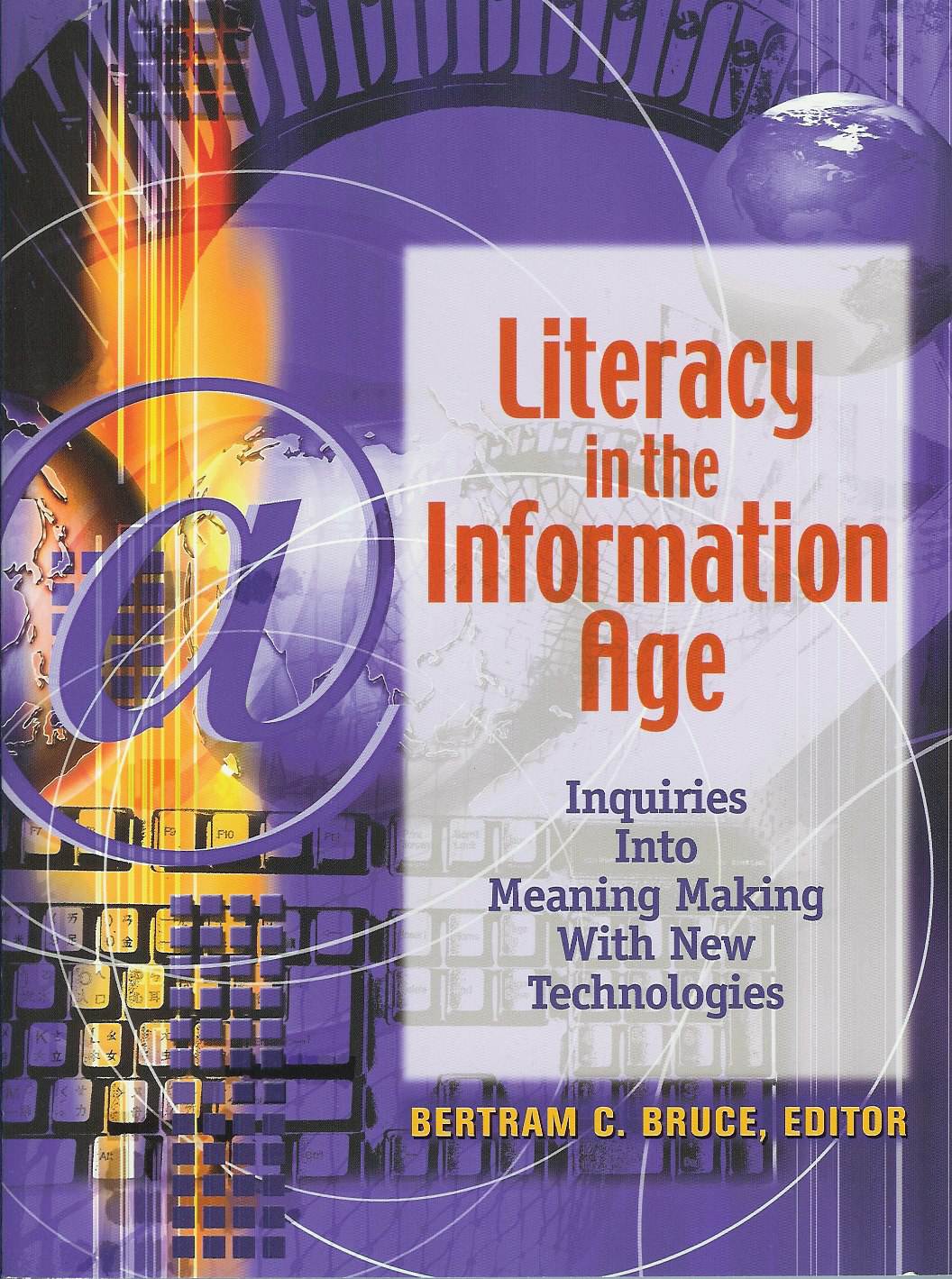
Literacy in the information age: Inquiries into meaning making with new technologies

liabookEducators today want to go beyond how-to manuals and publications that merely celebrate the many exciting new technologies as they appear in schools. Students are immersed in an evolving world of new technology development in which they are not passive recipients of these technologies but active interpreters of them. How do you help learners interpret these technologies as we all become immersed in the new information age? Continue reading

Paseo Boricua

Paseo Boricua flagPaseo Boricua has become the center of the Chicago Puerto Rican community. It’s a place where Puerto Ricans can learn about their heritage through the culture center and where the Pedro Albizu Campos High School provides an alternative school setting to help young people succeed. Puerto Rican restaurants and night life have developed along with commerce. Inquiry Project members have bcome active in working with the Paseo Boricua community.