Double hernia repair

Enjoying Northern Lights (about a true-life, foolhardy adventure) prior to surgery

Enjoying Northern Lights (about a true-life, foolhardy adventure) prior to surgery

This post is just a place to record some notes (newest first) regarding medications, symptoms and such related to my recent surgery, which my drug-addled brain might easily forget.

It has more detail than anyone wants, but I thought it might be useful for the post-op visit, for immediate family, and for me to monitor what I hope will be progress. The bottom line is that so far it’s going better than I expected.

July 4 (day 4)

Some dizziness and fatigue. Bruises showing more.

Exercise today: 12K steps, 34 floors

July 3 (day 3)

Feeling much better–lost most of fluid buildup, defecated, now less than pre-surgery weight, incisions healing well.

Considering the Wellfleet 5 mile Road Race, but wiser heads may prevail.

Exercise today: 9K steps, 31 floors

July 2 (day 2)

Removed bandages and showered this morning. It’s still sore at the incision sites and internally, where I’m assuming the mesh is, but mostly just when I bend. Still about 5.5 pounds over pre-surgery weight.

Having some side effects from the oxycodone (shaking, constipation); stopping that now.

Exercise today: 8K steps, 23 floors

July 1 (1st full day after surgery)

The pain still seems minor, more like high discomfort. So, I’m taking just one oxycodone at a time, roughly every four hours.

It hurts a bit more after a longish walk. The biggest problem is bending over, say, to tie shoes. The admonition to avoid lifting heavy objects is unnecessary, since there’s no way I’d attempt such a foolish thing.

The minor pains from last night (urination, throat, incision) seem mostly gone.

People who make standup desks ought to add serving hernia patients to their list of advantages.

Exercise today: 8K steps, 21 floors

CCH-banner

Cape Cod Hospital in Hyannis

June 30 (day of surgery)

I had bilateral laparoscopic inguinal hernia repair at 1:30 pm on June 30, 2016. Dr. Carlos Fonts was the surgeon. It was done in the O’Keeffe Surgical Pavilion at Cape Cod Hospital, which conveniently opened the year we moved to Cape Cod.

I have to add that I feel very fortunate with the surgeon and all the staff in his office at CC Hospital. They were very professional and courteous. When I said that all I wanted to drink after surgery was some water, a nurse from Morocco made me a “special” cocktail of fruit juices, which was delicious.

I recovered fine from surgery around 4 pm, without the embarrassing regurgitation I had after a previous surgery. My main complaint is a sore throat from the breathing tube. Later I discover some bleeding and minor pain around the naval incision and stinging urination.

There is also bloating. When I weighed myself the morning of surgery I was 217.7. The night after, having eaten modestly, I was 227.7 (a 10 pound increase).

Around 11 pm, I have my first sensation of pain at the sight of the repair, internally. Overall the pain is minor, so I took only two of the oxycodones today (6 pm, 11:30 pm).

It seems OK to walk, but difficult to bend over.

Exercise today: 1 K steps, 7 floors

The Children’s Room

Cape Cod Modern, by Peter McMahon & Christine Cipriani

Cape Cod Modern, by Peter McMahon & Christine Cipriani

Each age tries to form its own conception of the past. Each age writes the history of the past anew with reference to the conditions uppermost in its own time. –Frederick Jackson Turner, “The significance of history”, 1893

Tiny Wellfleet has been a significant home for histories of all stripes. These include psychohistory (Robert Jay Lifton, Erik Erikson, etc.), history employed to support social justice and civil rights (Howard Zinn, William McFeely, etc.), histories of colonial settlements, pirates, and whaling, and accounts of the daily lives of artists, shellfishers, and innumerable interesting characters. Wellfleet historical writing has for a long time been a vital participant in the story of Wellfleet, not simply a spectator.

A recent example is the winner of the 2015 Historic New England Book Prize, co-authored by Peter McMahon and Christine Cipriani: Cape Cod Modern: Mid-century Architecture and Community on the Outer Cape.The book uses architectural and personal photos, and interviews with designers, their families, and their clients to document the experimental homes designed by a cosmopolitan group of designers who settled in Wellfleet and Truro in the mid-20th century. The book has stimulated renewed interest in Bauhaus, in the so-called modernist houses, and in the community around them.

Preparatory drawing for playroom mural in Kepes House, Cambridge, Massachusetts, by Julia Kepes

Preparatory drawing for playroom mural in Kepes House, Cambridge, Massachusetts, by Julia Kepes

A complementary project can now be seen with the summer opening of the Wellfleet Historical Society and Museum today. The Children’s Room, Art and Design of Wellfleet’s Mid-century Children’s Books is a collaboration of WHSM with the Cape Cod Modern House Trust and the Wellfleet Public Library. Here’s a description from the WHSM site:

During the 1930s Wellfleet’s population was just barely 800 people, and yet over 1,000 books have been published by, or about, the town’s mid-century denizens, around 200 being inventive books for children. Many of these books were designed and illustrated by some of the most acclaimed graphic artists of the era. This exhibit includes a selection of books, artifacts and original artwork.

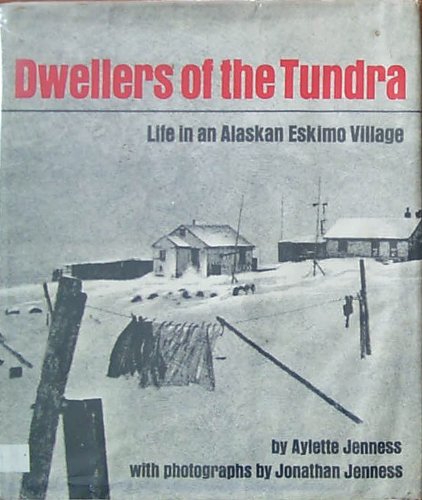
Dwellers of the Tundra, by Aylette Jenness & Jonathan Jenness

Dwellers of the Tundra, by Aylette Jenness & Jonathan Jenness

Many of the artists and authors of the children’s books were connected with Bauhaus, and its emphasis on learning, science, experimentalism, and progressive politics. That can be seen in the wide variety of nature topics and in sympathetic depictions of diverse cultures.

As with Bauhaus, the exhibit invites participation. Visitors can observe blown-up versions of artwork from the children’s books, and peruse the books themselves. There are specially designed benches on which to sit or to spread out the objects. There are also crayons and paper to create your own artworks.

I like the fact that the museum is opening just after the summer solstice (a special one at that, coinciding with a strawberry moon). Bauhaus was very aware of new technologies, materials, and scientific discoveries. A love of nature and its meanings for humans was evident throughout its history. Wellfleetian Ati Gropius, who was the daughter of founder Walter, would gather people in late June and ask “What does the summer solstice mean to you?” Several of the Bauhaus-connected houses took advantage of solar or lunar movements in their design. So, it’s appropriate that this wonderful new exhibit welcome the summer season.

Fidelia, by Ruth Adams & Ati Forberg (Gropius)

Fidelia, by Ruth Adams & Ati Forberg (Gropius)

The new Children’s Room is filled with wonderful individual items. There are Caldecott award winners and artworks that are surprisingly fresh and striking a half century or more after they were created. But the exhibit as a whole brings the items together in a provocative way, adding new meaning to the specific items and to our understanding of that mid-century era.

As I think about how our history-making enriches life in Wellfleet, I’m reminded of William James’s comment about teaching:

You can give humanistic value to almost anything by teaching it historically. Geology, economics, mechanics, are humanities when taught with reference to the successive achievements of the geniuses to which these sciences owe their being. Not taught thus literature remains grammar, art a catalogue, history a list of dates, and natural science a sheet of formulas and weights and measures. –William James, “The social value of the college-bred,” 1907